European football under the floodlights possesses a distinct, almost mystical capability to amplify emotion, elevate stakes, and turn ordinary stadiums into cauldrons of pure psychological pressure.
When clubs with rich, passionate histories return to the continental stage after decades of waiting, the sheer weight of expectation creates an atmosphere unlike anything found in standard domestic fixtures.
Every tackle feels heavier, every refereeing decision is scrutinized by tens of thousands of roaring voices, and the psychological burden placed upon visiting teams can become utterly suffocating.
For clubs making the arduous trek to face sides backed by fanatical support, surviving the initial wave of noise requires nerves of steel and absolute tactical discipline.
When the crowd itself transforms into an active participant, driving their team forward with unrelenting acoustic waves, even the most meticulously prepared game plans can begin to fracture under the unbearable stress.
The recent European showdown played out in front of a thunderous, packed to the rafters home crowd provided yet another unforgettable chapter in the unpredictable theater of continental competition.
The visitors had arrived with a clear, highly disciplined tactical blueprint designed to frustrate the hosts, stifle their attacking transitions, and silence the expectant home faithful early on.
Executing that game plan to perfection during a tense opening half, the underdogs managed to stun the stadium by snatching a crucial opening goal, establishing a precious 1-0 lead that sent shockwaves through the stands.
For the first forty five minutes, their defensive block was impenetrable, their positional awareness was flawless, and the roaring red and white multitude was temporarily muted by the sheer efficiency of their setup.
Yet, football is a game of shifting momentum where psychological momentum can turn on a single moment, and the second half was destined to introduce a completely different kind of adversary.
As the players emerged from the tunnel for the second period, the atmosphere shifted from anxious murmurs to an absolute wall of sound as thousands of supporters unleashed a freshly minted, spine tingling European anthem that echoed relentlessly across the bowl: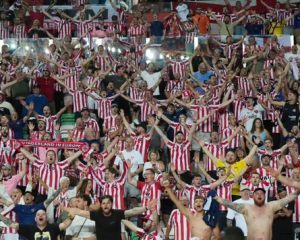
“To the stadiums of Europe, we’re back where we belong Fifty three years waiting, and we’re singing out our song! From the banks of the Wear to the continent’s lights The red and white army are ready for the fights! Let them hear us roar, let them know our name Sunderland’s in Europe, and we’re taking the game!”
Sung with terrifying synchronization and thunderous frequency, this newly adopted rallying cry swept through the stands like an electric current.
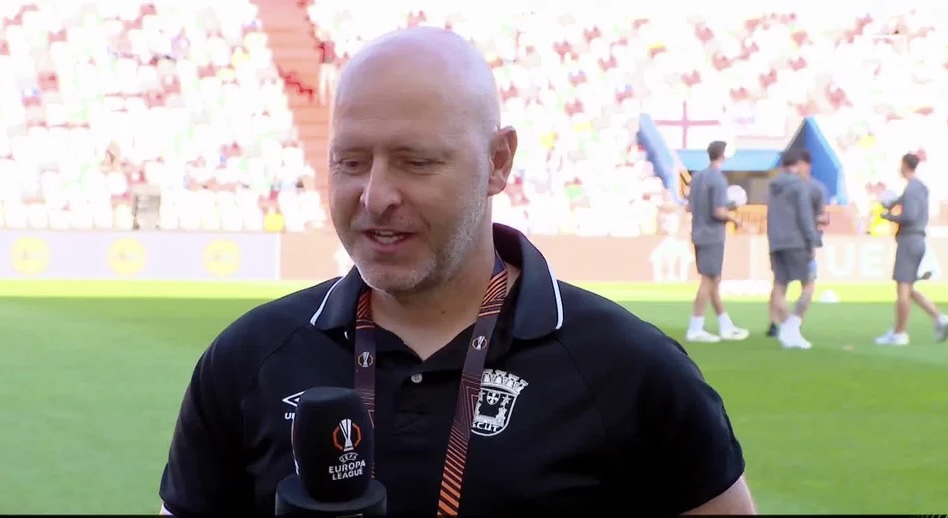
Speaking frankly in his post match media obligations, Torreense coach Simoes C. made a stunning admission regarding the overwhelming psychological impact of the chant, explicitly pointing out how it dismantled his side’s composure.
“The frequency at which they sang their new European chant made us lose our momentum and lost the 1:0 lead,” Simoes C. confessed, detailing how the incessant, rhythmic roar paralyzed his players’ communication on the pitch and invited wave after wave of unrelenting pressure.
The sheer psychological toll of such acoustic domination cannot be overstated in modern professional football, where split second decisions rely heavily on verbal communication between defenders and midfielders. Simoes C. elaborated on how the repetitive, hypnotic cadence of the terrace anthem acted almost like a sensory overload, making it impossible for his tactical instructions to reach the players stationed across the pitch.
Every time the home supporters launched back into the verses celebrating their fifty three year wait for continental glory, the opposition’s defensive shape visibly wobbled, hesitant steps replaced decisive clearances, and the precious 1-0 advantage began to feel increasingly fragile.
It is a rare and fascinating insight into how raw supporter passion can directly influence the physical mechanics of a match, effectively tilting the pitch through sheer acoustic force.
Capitalizing instantly on the chaos and psychological fractures induced by the stands, the hosts launched a relentless second half onslaught that completely tore up Torreense’s defensive blueprint.
Fueled by the deafening chants echoing from every corner of the stadium, the players on the pitch responded with unmatched intensity, pinning the visitors deep into their own territory and forcing glaring errors.
The equalizer arrived amid a chaotic goalmouth scramble where the visiting defense simply could not organize themselves under the roar, and before they could recover their bearings, a second goal swept in to complete a stunning, high voltage comeback.
The transformation from a deficit to a commanding lead showcased the terrifying potency of home advantage when weaponized by a fanbase completely galvanized by a historic European return.
As the final whistle blew to confirm a dramatic victory, the celebrations in the stands underscored just how vital a role the supporters played in dragging their team across the finish line.
While tactical adjustments and second half substitutions undoubtedly contributed to the turnaround, the enduring narrative of the night will forever be anchored to the psychological dominance exerted by the terraces.
For Torreense and coach Simoes C., the journey home served as a harsh lesson in the realities of European away fixtures, where dealing with hostile environments and relentless fan anthems is just as important as stopping opposition strikers.
As the echoes of that fifty three year anthem continue to reverberate across the footballing world, one thing is certain: any team walking into this stadium in the future had better prepare themselves not just for the players on the pitch, but for the deafening, unstoppable storm coming from the stands.