Author: Onimisi Harun

  • David Moyes Targets 3 World-Class Strikers in January 2027 to Solve  Squad Depth Problems and Make His Team Unstoppable.

    David Moyes Targets 3 World-Class Strikers in January 2027 to Solve Squad Depth Problems and Make His Team Unstoppable.

    David Moyes could be preparing for a crucial January 2027 transfer window as Everton look to strengthen their attacking options and solve their growing squad depth concerns. With Ricardo Pepi, Orri Óskarsson and Christian Kofane emerging as potential candidates, the Merseyside club could have an opportunity to transform its forward line and improve its competitiveness in the second half of the season.

    Everton’s need for another reliable centre-forward has become increasingly important following the departure of Beto and the failure to secure a replacement during the summer transfer window. Thierno Barry has carried much of the responsibility up front, but relying heavily on one recognised striker can become dangerous when injuries, fatigue and a demanding fixture schedule arrive.

    For Moyes, January represents an opportunity to address these weaknesses and build a squad capable of competing more consistently against Premier League rivals.

    1. Ricardo Pepi: The Clinical American Goalscorer

    Ricardo Pepi could be an exciting addition to Everton’s attacking department. The American international, who plays for PSV Eindhoven, has established himself as a dangerous goalscorer with impressive movement, intelligent positioning and an instinct for finding the back of the net.

    Pepi’s ability to operate inside the penalty area would offer Everton a forward who thrives on chances created by his teammates. His finishing instincts could be particularly useful in matches where Everton dominate possession but struggle to convert opportunities into goals.

    At just 23 years old, Pepi also represents a potential long-term investment. His experience in European football and his development with the United States national team could help him adapt to the demands of English football.

    However, securing his signature would depend on PSV’s willingness to negotiate and Everton’s ability to meet the financial requirements of a deal. If Moyes can convince the Dutch club to consider a transfer, Pepi could become an important part of Everton’s attacking plans.

    2. Orri Óskarsson: Iceland’s Promising Striker

    Orri Óskarsson is another forward who could strengthen Everton’s attacking options. The Icelandic international plays for Real Sociedad in Spain and has attracted attention following his performances in La Liga.

    Óskarsson combines physical presence with technical ability and a growing reputation for scoring goals. His movement, composure in front of goal and willingness to attack spaces could make him a useful option for Moyes.

    At 22, he also offers significant potential for further development. Bringing a young striker into the squad would give Everton another option immediately while providing the opportunity to build a more reliable attacking unit for future seasons.

    Nevertheless, Everton would face competition from other Premier League clubs reportedly monitoring the Icelandic forward. Any potential move would also depend on Real Sociedad’s willingness to negotiate during the middle of the season.


    If Everton can secure his services, Óskarsson could provide valuable competition for Barry and give Moyes greater flexibility when selecting his starting eleven.


    3. Christian Kofane: The Powerful Young Forward


    Christian Kofane could be another ambitious option for Everton as they search for attacking reinforcements. The Cameroon international plays for Bayer Leverkusen in Germany and has attracted interest following his emergence as a promising young striker.


    Kofane’s physical strength, mobility and versatility make him an intriguing prospect. His ability to operate centrally and in wider attacking positions could give Moyes additional tactical options when facing different opponents.

    At 20, the forward has considerable room to develop. Working under an experienced manager could help him improve his decision-making, movement and consistency in front of goal.

    However, Bayer Leverkusen may be reluctant to allow him to leave, particularly if they consider him an important part of their long-term plans. Everton would therefore need to negotiate carefully and determine whether a January deal is financially and practically achievable.

    Despite these challenges, Kofane could become a valuable addition if Everton manage to reach an agreement.

    Can These Three Strikers Transform Everton?

    Signing all three forwards in January would be an ambitious move, and there is no confirmation that Everton intend to recruit all of them. Nevertheless, the trio represent different attacking profiles that could address the club’s need for greater depth.

    Pepi offers penalty-box instincts and goalscoring ability, Óskarsson brings technical quality and developing experience, while Kofane provides physicality, mobility and long-term potential.

    Adding quality to the forward line would reduce the pressure on Barry, increase competition for starting places and allow Moyes to rotate his players more effectively throughout a demanding campaign.

    Ultimately, Everton’s January recruitment could play a significant role in determining how successful the remainder of the season becomes. If Moyes identifies the right targets and the club provides the necessary financial backing, Everton could build a more balanced and dangerous squad.
  • Unai Emery Has Reportedly Ended Alejandro Garnacho’s Aston Villa Career After Fenerbahçe Thrashing Disappointment

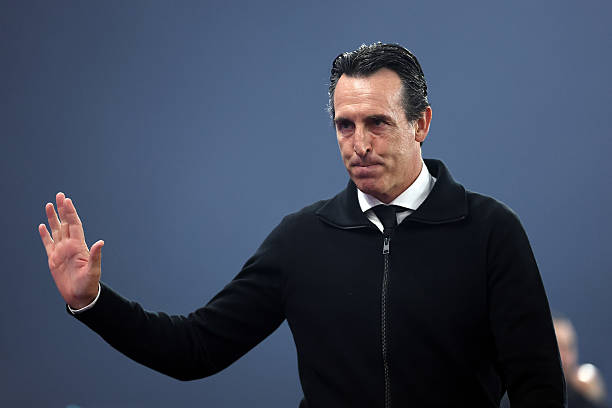
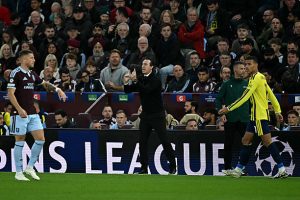
    Unai Emery Has Reportedly Ended Alejandro Garnacho’s Aston Villa Career After Fenerbahçe Thrashing Disappointment

    Aston Villa manager Unai Emery is reportedly ready to draw the curtain on Alejandro Garnacho’s time at the club following a disappointing result against Fenerbahçe. The heavy defeat has raised questions about the team’s performance, individual accountability, and the manager’s plans for players who have failed to meet expectations.

    Garnacho, known for his pace, direct running, and ability to trouble defenders, has built a reputation as an exciting attacking talent. However, football at the highest level demands more than individual brilliance. Consistency, tactical discipline, teamwork, and the ability to perform under pressure are all essential qualities for a player hoping to establish himself in a competitive squad.

    The suggestion that Emery has decided to end Garnacho’s Aston Villa career would represent a significant development. Yet, any claim that the manager has made such a decision should be treated cautiously unless confirmed by reliable reporting or an official club statement.

    A Heavy Defeat That Could Change Everything

    Defeats can have consequences that extend beyond the final scoreline, particularly when a team performs below expectations in a high-profile fixture. A heavy loss can expose defensive weaknesses, reveal a lack of coordination, and force a manager to reconsider his starting lineup.

    For Emery, whose managerial philosophy places considerable emphasis on tactical organisation, pressing, positional discipline, and intelligent movement, disappointing performances can create difficult selection decisions. Every player must understand his responsibilities, both with and without the ball.

    If Garnacho struggled to meet those demands against Fenerbahçe, the performance could intensify scrutiny of his role within the team. However, one match alone would rarely provide sufficient evidence to conclude that a player’s career at a club has definitively ended.

    Football managers must assess the bigger picture. Training performances, attitude, fitness, tactical understanding, and contributions across multiple matches all influence decisions about a player’s future.

    Why Garnacho’s Situation Would Matter

    Garnacho’s appeal lies in his willingness to take on defenders, attack space, and create opportunities in dangerous areas. Players with his characteristics can offer a team a valuable attacking outlet, particularly against opponents who defend deep or leave space behind their defensive line.

    Nevertheless, attacking players are often judged by their end product. Successful dribbles must lead to meaningful chances, while movement off the ball must contribute to the team’s overall attacking structure.

    In a system built around collective responsibility, a winger cannot focus exclusively on attacking. He must also track opposing full-backs, press at the appropriate moments, protect possession, and make decisions that benefit the team.

    If Emery believes Garnacho is not fulfilling these responsibilities, he could consider reducing his minutes, changing his position, or exploring other options in the transfer market. Such decisions, however, would depend on the actual circumstances rather than speculation surrounding a single result.

    Emery’s Ruthless Approach to Team Selection

    One of Emery’s responsibilities is to maintain standards throughout his squad. Reputation and potential can open doors, but they do not guarantee a permanent place in the starting eleven.

    Managers competing at the highest level must continually evaluate whether their players fit the team’s tactical requirements. A player who fails to adapt may find himself on the bench, even if he possesses exceptional technical ability.

    If Garnacho’s situation has deteriorated, the key question would be whether Emery still believes he can contribute to Aston Villa’s ambitions. A difficult spell does not necessarily mean the relationship is beyond repair. Honest conversations, improved performances, and greater tactical discipline can sometimes restore a player’s standing.

    Equally, if the manager has lost confidence in a player’s ability to deliver consistently, a departure could become a realistic possibility.

  • 15 out of 20 Premier League clubs would need to vote in favour to expel Man City from the league.

    15 out of 20 Premier League clubs would need to vote in favour to expel Man City from the league.

    Manchester City’s future in the Premier League has become the subject of intense discussion after an independent Commission found the club guilty of serious breaches of the Premier League’s financial rules.

    The verdict, announced on September 29, 2026, relates to breaches covering a nine-season period. According to the Premier League, the Commission found that Manchester City had arranged misleading commercial agreements, submitted misstated accounts and breached spending limits. It also found multiple breaches relating to the club’s cooperation with the League’s investigation.

    With the case now moving towards the punishment stage, one of the most serious possible sanctions is expulsion from the Premier League.

    However, expelling Manchester City would not simply be a matter of the independent Commission making a decision and City immediately leaving the competition.

    According to Sky Sports, any decision to expel Manchester City would have to be ratified through a vote involving the other Premier League clubs. A three-quarters majority is required, meaning 15 votes would be needed for the expulsion to be approved.

    That means Manchester City’s 19 fellow Premier League clubs would effectively hold the votes required to determine whether an expulsion motion could proceed.

    The 19 clubs that could vote

    The Premier League’s 2026/27 membership consists of:

    1. Arsenal

    2. Aston Villa

    3. AFC Bournemouth

    4. Brentford

    5. Brighton & Hove Albion

    6. Chelsea

    7. Coventry City

    8. Crystal Palace

    9. Everton

    10. Fulham

    11. Hull City

    12. Ipswich Town

    13. Leeds United

    14. Liverpool

    15. Manchester United

    16. Newcastle United

    17. Nottingham Forest

    18. Sunderland

    19. Tottenham Hotspur

    20. Manchester City

    The Premier League itself confirms these are the 20 clubs competing in the 2026/27 season.

    Manchester City would not be voting on its own expulsion, leaving the other 19 clubs involved in the ratification process. Any 15 of those 19 clubs would therefore be enough to reach the reported 15-vote threshold.

    What happens before any vote?

    The situation is not yet at the point where Manchester City has been expelled.

    The independent Commission’s guilty findings are separate from the eventual punishment. Manchester City also has an appeal process available, meaning the club can challenge the findings before the final consequences are settled.

    The Premier League has confirmed that serious breaches of its rules can lead to a range of disciplinary sanctions. These can include fines and points deductions, while expulsion is described as an extreme possible punishment. The League says expulsion has never previously occurred in Premier League history.

    Sky Sports has reported that other possible sanctions could include a points deduction, transfer-related restrictions or a combination of punishments.

    That makes the coming months potentially significant for Manchester City.

    Why the 15 votes matter

    The mathematics is straightforward.

    There are 20 Premier League clubs. Three-quarters of 20 is 15.

    Therefore, if an expulsion resolution requires the reported three-quarters threshold, 15 votes in favour would be required.

    The crucial point is that there is currently no confirmed list of 15 clubs that have agreed to vote for expulsion. Any suggestion that specific clubs have already committed their votes should therefore be treated cautiously unless those clubs publicly confirm their positions.

    The Premier League’s general governance structure gives each member club one vote. For ordinary rule changes and major commercial proposals, the League says a two-thirds majority, or 14 clubs, is generally required. Expulsion is a different matter, with the reported three-quarters threshold applying to the special expulsion process.

    A major decision for the Premier League

    The potential expulsion of Manchester City would represent an extraordinary moment for English football.

    City have been one of the dominant clubs in the Premier League era, winning numerous league titles and becoming a major force in domestic and European football. Their removal would therefore have sporting, financial and administrative consequences extending beyond the club itself.

    But at present, expulsion remains only one of the possible outcomes.

    The immediate process involves Manchester City’s appeal rights, the eventual sanctions hearing and the subsequent steps required under Premier League rules.

    For now, the key figure remains 15.

    If expulsion is ultimately put to the required vote, Manchester City’s Premier League future could depend on whether at least 15 of the other 19 clubs support the resolution.

    The question is no longer simply what punishment the independent Commission may recommend or impose. The reported voting mechanism means the other Premier League clubs could also have a crucial role in determining whether the most severe possible sanction becomes reality.

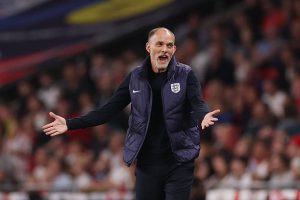
  • England 2-3 Spain: Thomas Tuchel Furious as He Names 3 Players He Blames for Nations League Defeat Despite All the Tactical Training!

    England 2-3 Spain: Thomas Tuchel Furious as He Names 3 Players He Blames for Nations League Defeat Despite All the Tactical Training!

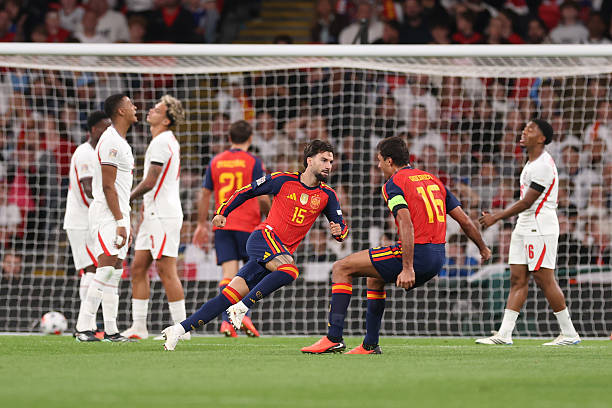
    England’s dramatic 3-2 defeat to Spain at Wembley has left Thomas Tuchel and his players facing serious questions after the Three Lions surrendered a 2-1 half-time lead against the world champions.

    The defeat was particularly painful because England had shown enough quality to turn the match around after Lamine Yamal gave Spain an early lead. Anthony Gordon levelled the contest before Harry Kane headed England in front, giving Tuchel’s side a valuable advantage going into the interval.

    However, the second half produced a completely different story.

    Spain recovered, equalised through Álex Baena and eventually completed the comeback through Mikel Oyarzabal. England also had a major opportunity to restore their advantage when they were awarded a penalty after Jude Bellingham was brought down in the box. Kane stepped up, but his effort struck the crossbar after he slipped during the attempt.

    That moment could become one of the biggest talking points from the match.

    The Three Players Under Scrutiny

    Reports confirm that Tuchel named three players and personally blamed them, the names being linked to the criticism are Ezri Konsa, Harry Kane and Jude Bellingham.

    Konsa’s name enters the discussion because England’s defensive structure came under pressure throughout the match. Sky Sports reported that defensive errors contributed to Spain’s goals, while England were repeatedly exposed as Spain increased the pressure after half-time.

    Kane, meanwhile, faces an obvious talking point because of the missed penalty.

    The England captain had already scored to put his team 2-1 ahead, but his second-half penalty presented England with an opportunity to restore their two-goal advantage. Instead, the ball crashed against the crossbar and Spain subsequently turned the match around.

    Bellingham’s situation is more complicated.

    The Real Madrid midfielder actually played an important role in England’s first goal, providing the pass that released Gordon during the counter-attack. He was also the player fouled for the penalty that Kane subsequently missed.

    Nevertheless, his involvement in the incident means his name has inevitably become part of the post-match debate.

    Tuchel’s Tactical Preparation Questioned

    The defeat also raises questions about whether England were able to maintain the tactical discipline they had prepared for before facing Spain.

    Tuchel has repeatedly emphasised the importance of tactical organisation, intensity and improving England’s performances against elite opponents. Yet after taking the lead, England struggled to prevent Spain from regaining control.

    The Guardian noted a striking similarity between this defeat and England’s World Cup semi-final loss to Argentina: England went ahead and played well for periods before losing control later in the match.

    That pattern will concern Tuchel.

    The England manager himself insisted after the Spain match that his side had been the better team and had dominated significant portions of the game, despite ultimately losing 3-2.

    That assessment creates an intriguing contradiction.

    If England were capable of dominating the world champions for long periods, why did they fail to finish the job?

    Spain Punish England’s Mistakes

    The answer may lie in the difference between controlling possession and controlling decisive moments.

    Spain did not need to dominate every phase of the match. Instead, they capitalised when England made mistakes.

    Lamine Yamal punished England early. Baena then restored Spain’s momentum after the penalty miss, while Oyarzabal eventually delivered the decisive blow.

    For England, the lesson is clear: against a team of Spain’s quality, opportunities cannot be wasted.

    The Three Lions had chances to extend their lead, but Spain remained dangerous enough to punish every opening.

    The defeat does not decide England’s entire Nations League campaign, but it puts additional pressure on Tuchel and his players to respond in their next fixtures.

    The manager will now have to examine what went wrong after England moved ahead. He must also determine whether the defensive structure can withstand sustained pressure from elite opponents.

    For Kane, the focus will naturally be on recovering from the missed penalty. For Bellingham, attention will centre on his overall influence in midfield and his contribution to England’s attacking transitions. And for Konsa, defensive organisation will remain an important part of the post-match analysis.

    England led Spain 2-1 at Wembley, had an opportunity to go 3-1 ahead from the penalty spot, and ultimately lost 3-2.

    For Tuchel, the task now is to make sure England learn from those decisive moments.

    Because against Spain, tactical preparation got England into a winning position.

    It was what happened afterwards that allowed the world champions to take the victory.

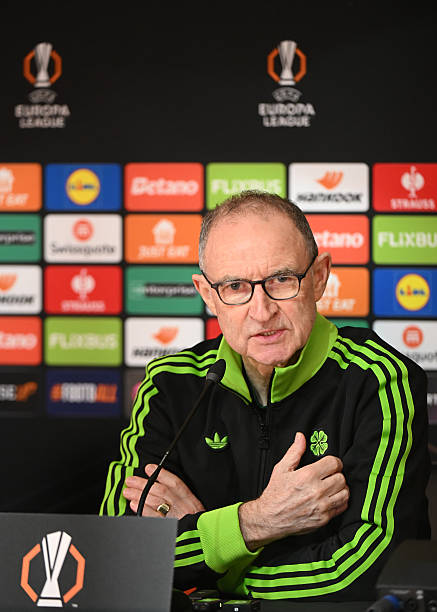
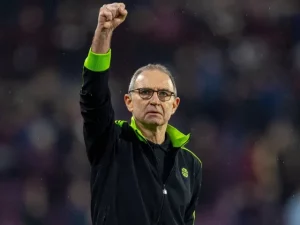
  • 74-YEAR-OLD MARTIN O’NEILL FINALLY BREAKS SILENCE ON SACK SPECULATION: IN HIS WORDS, HE PROMISED TO BE A WORLD CHAMPION WITH CELTIC BEFORE RETIREMENT AND MADE OTHER HIGHLY PROMISING COMMITMENTS IF GIVEN TIME

    74-YEAR-OLD MARTIN O’NEILL FINALLY BREAKS SILENCE ON SACK SPECULATION: IN HIS WORDS, HE PROMISED TO BE A WORLD CHAMPION WITH CELTIC BEFORE RETIREMENT AND MADE OTHER HIGHLY PROMISING COMMITMENTS IF GIVEN TIME

    Martin O’Neill’s future at Celtic has suddenly become one of the biggest talking points around Parkhead after a difficult run of results, with the 74-year-old manager now facing questions about whether he will continue in the role.

    The situation intensified following Celtic’s 1-0 defeat to Rangers at Parkhead on September 20, their third consecutive defeat in all competitions. That loss came shortly after a 3-1 Europa League defeat against Ferencvaros and another heavy defeat to Rangers in the League Cup.

    O’Neill himself admitted after the Rangers defeat that he needed to take time to reflect on his position. He said he would consider the situation during the international break, even joking about his age and suggesting that it might be time to “wrap it up.”

    Those comments immediately fuelled speculation about whether Celtic could be heading towards another managerial change.

    However, there is important context behind O’Neill’s current position. The experienced manager only returned to Celtic last season as an interim appointment after the club went through a turbulent period. His two spells in charge ultimately ended with Celtic winning the Scottish Premiership and Scottish Cup, leading the club to hand him a one-year contract with an option for another season in June 2026.

    When his permanent appointment was confirmed, O’Neill made it clear that winning the domestic double had increased his desire for more success.

    He spoke about wanting to experience “more days like those” with Celtic, signalling that he still had ambitions with the club despite his age.

    That ambition is now being tested.

    Celtic’s difficult European campaign has added to the pressure. The club suffered a dramatic Champions League qualifying collapse against LASK after holding a 4-0 aggregate advantage before eventually losing the tie 5-1 after extra time in Austria. O’Neill described the experience as one of his most painful moments at Celtic.

    The subsequent defeats to Rangers and Ferencvaros have only increased the scrutiny surrounding the manager.

    Yet Celtic’s hierarchy has now provided an important response to the speculation.

    Chief executive Michael Nicholson publicly backed O’Neill following the defeat to Rangers, indicating that the club intends to support the manager during this difficult period. Nicholson also highlighted O’Neill’s contribution in stabilising the club and his success in winning the domestic double last season.

    That backing means the immediate situation is not simply a story of Celtic preparing to dismiss their manager.

    Instead, there appears to be uncertainty surrounding O’Neill’s own thoughts about whether he wants to continue.

    His comments have created a fascinating situation because the manager has already demonstrated that he can deliver silverware at Celtic. His previous spell between 2000 and 2005 brought seven trophies, while his return last season produced another league and Scottish Cup double.

    For supporters, the central question is therefore not only whether O’Neill can turn the current situation around, but also whether he believes he still has the energy and desire to continue the challenge.

    At 74, O’Neill is one of the oldest managers currently operating at this level, but his age has not stopped him from taking on the pressure of leading Celtic. Earlier this season, he was still overseeing a team competing for domestic success and European qualification.

    The coming weeks could therefore be crucial.

    The international break provides O’Neill with time away from the immediate pressure of matchdays. Celtic are expected to use the period to regroup, while the manager considers his position and the team prepares for its return to competitive action.

    For now, there is no confirmed announcement that O’Neill has been sacked. In fact, the latest comments from Celtic’s chief executive point towards continued support for the manager.

    The bigger story, therefore, is O’Neill’s own uncertainty.

    Whether he decides to stay and attempt to rebuild momentum or ultimately concludes that his time at Celtic should come to an end remains to be seen.

    One thing is clear: the man who returned to Celtic after retirement and helped deliver another domestic double is not leaving quietly. His Celtic journey has already produced remarkable moments, and his latest chapter is now being played out under intense pressure.

    If O’Neill remains, supporters will be watching closely to see whether he can respond to the recent setbacks and restore the momentum that previously brought success.

    And if he does leave, his return will still be remembered for the extraordinary turnaround that produced league and Scottish Cup success.

    For now, though, Martin O’Neill is reflecting, Celtic are backing him, and the future remains the subject of intense speculation.

  • VAR DRAMA ERUPTS AS FA QUERIES REFEREE Over Everton’s Disallowed Second Goal Against Ipswich as Shocking Evidence Emerges!

    VAR DRAMA ERUPTS AS FA QUERIES REFEREE Over Everton’s Disallowed Second Goal Against Ipswich as Shocking Evidence Emerges!

    Everton’s hard-fought 1-0 victory over Ipswich Town has been overshadowed by another major VAR controversy after Thierno Barry’s second goal was ruled out following a lengthy review.

    The Toffees secured all three points at the Hill Dickinson Stadium on Saturday, with Barry scoring Everton’s only goal of the afternoon. However, the victory could have been considerably more comfortable had his second-half header been allowed to stand.

    Barry appeared to have doubled Everton’s advantage shortly before the hour mark when he met Kiernan Dewsbury-Hall’s corner with a glancing header that found the far corner of the net.

    Celebrations followed, but they were abruptly cut short when VAR intervened.

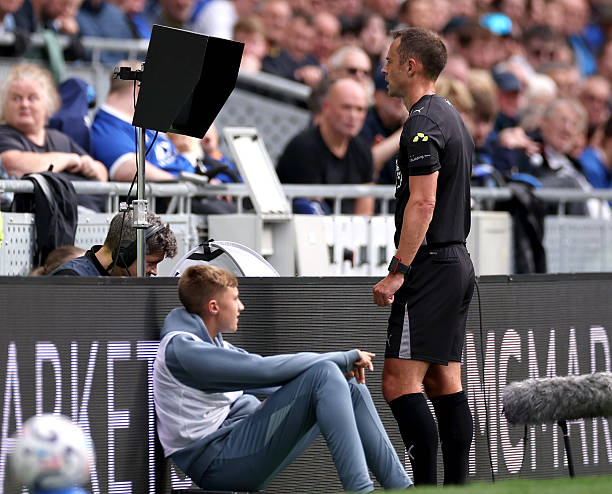
    Referee Stuart Attwell was advised to review the incident at the pitchside monitor after VAR officials concluded that Everton forward Brennan Johnson had been in an offside position and had interfered with Ipswich goalkeeper Christian Walton.

    Attwell subsequently overturned the goal.

    The decision immediately became the major talking point of the match, particularly because Johnson was not close to the ball when Barry made contact with the corner. Sky Sports reported that the VAR decision was based on Johnson being judged to have interfered with Walton’s line of sight.

    What has intensified the debate is the available replay footage.

    Johnson was positioned in front of Walton, but the ball travelled towards the opposite side of the goal, raising questions over whether his position actually prevented the goalkeeper from making an attempt to save Barry’s header.

    One report described the goalkeeper as being positioned on the opposite side of the goal from where the ball entered, while another noted that Walton did not appear to protest the decision.

    That has left Everton supporters questioning the threshold being used to determine what constitutes interference.

    Under the Laws of the Game, an offside-positioned player can be penalised if they clearly obstruct an opponent’s line of vision or otherwise interfere with an opponent. VAR can recommend an on-field review when there is a potential clear and obvious error in a goal or no-goal decision, but the final decision remains with the referee.

    The controversy is particularly significant because English refereeing has already been under intense scrutiny in recent weeks.

    The latest incident comes only days after another highly debated VAR decision in the Manchester derby prompted a review and public scrutiny of the officiating process.

    For Everton, the controversy did not ultimately cost them points.

    Barry’s earlier goal in the 11th minute proved decisive. James Tarkowski’s long-range effort struck Barry and wrong-footed Walton, giving Everton the lead. The Toffees then held on to secure a second league victory of the season and extend their unbeaten start.

    David Moyes’ side also had other opportunities to put the match beyond Ipswich, but they were unable to add another legitimate goal.

    Ipswich were reduced to ten men when Abdul Fatawu received a second yellow card for simulation in the 67th minute, making Everton’s failure to score again even more frustrating.

    Despite the controversy, Everton’s defensive resilience ultimately secured the result. Jordan Pickford made important saves, while Everton’s backline dealt with Ipswich’s late pressure to preserve the clean sheet.

    However, the argument surrounding Barry’s disallowed goal is unlikely to disappear quickly.

    The central question is simple: did Brennan Johnson’s offside position genuinely interfere with Christian Walton’s ability to save the header?

    Those defending the decision can point to the Laws of the Game, which allow a goal to be disallowed when an offside player clearly obstructs an opponent’s line of vision.

    Those questioning the decision argue that the goalkeeper appeared to have a clear enough view and that the ball travelled away from Johnson’s position.

    That difference in interpretation is precisely why VAR continues to generate heated debate.

    Everton may have walked away with the points, but the controversy has once again placed the spotlight on the officials and the increasingly fine margins being used to determine whether goals should stand.

    For supporters, the frustration is not simply about one disallowed goal. It is about consistency.

    If similar incidents are interpreted differently from one match to another, questions over VAR’s application will inevitably continue.

    For now, the official outcome remains unchanged: Everton 1-0 Ipswich.

    But the debate surrounding Thierno Barry’s disallowed second goal is only beginning.

    And Everton fans will undoubtedly be asking one question:

    Was this another case of VAR getting the decision right, or did technology turn a perfectly good goal into another officiating controversy?

  • Celtic Fans Take to the Streets Chanting “SACK MARTIN O’NEILL” After Ferencváros Defeat (3-1); But What They Demanded From the Players Is SHOCKING!

    Celtic Fans Take to the Streets Chanting “SACK MARTIN O’NEILL” After Ferencváros Defeat (3-1); But What They Demanded From the Players Is SHOCKING!

    Celtic’s difficult week has taken another dramatic turn after the Hoops suffered a painful 3-1 defeat to Ferencváros at Celtic Park, just days after their 3-0 loss to Rangers.

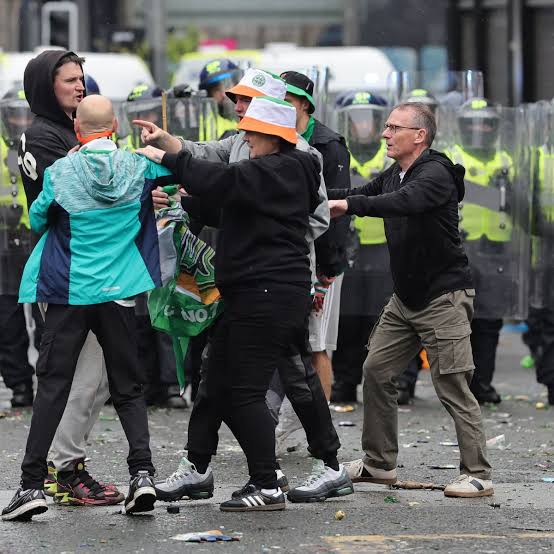
    The latest defeat has intensified frustration among supporters, with sections of the Celtic fanbase openly questioning the team’s performances and calling for changes. The atmosphere became increasingly hostile as the final whistle approached, with supporters booing the team after another disappointing performance.

    For Martin O’Neill, the defeat represents another major setback.

    Celtic had been expected to respond strongly after their heavy Old Firm defeat, particularly because the Ferencváros match was their Europa League opener. Instead, the team conceded three goals and suffered another damaging defeat in front of their home supporters.

    “SACK MARTIN O’NEILL”

    The frustration among supporters has now moved beyond simply criticising individual players.

    Some Celtic supporters have publicly called for O’Neill to be sacked following the consecutive defeats. Online fan discussions have included demands for the management to go, with some supporters arguing that the performances have become unacceptable.

    That reaction needs to be understood in the context of the results.

    Celtic were beaten 3-0 by Rangers at Ibrox before returning home and losing 3-1 to Ferencváros. In both matches, the team struggled to produce the response supporters wanted.

    Against Ferencváros, Celtic initially appeared capable of recovering after Mika Baur equalised shortly before half-time. However, Kristoffer Zachariassen restored the visitors’ advantage just before the break, before former Celtic player Daniel Arzani scored early in the second half to make it 3-1.

    From that point, Celtic were unable to produce the comeback their supporters were hoping for.

    But What Did the Fans Demand?

    The most striking part of the reaction was not simply the criticism of O’Neill.

    Supporters also demanded a much stronger response from the players themselves.

    The message from angry fans was essentially that wearing the Celtic shirt should come with responsibility, intensity and commitment. Supporters wanted the players to fight for every ball, show greater urgency and demonstrate that they understood the importance of representing the club.

    That frustration was reflected in the reaction at Celtic Park.

    Fans did not simply want an apology. They wanted a performance.

    They wanted players who would respond when the team was behind instead of appearing to lose confidence.

    They wanted intensity.

    They wanted character.

    And, most importantly, they wanted Celtic to start playing with the identity and aggression expected from a club of its stature.

    O’Neill Understands the Anger.

    Interestingly, O’Neill himself acknowledged the supporters’ frustration after the match.

    Following the 3-1 defeat, the Celtic manager accepted that the fans had every reason to be disappointed with the result. He also pointed to problems in the team’s attacking play, including opportunities that were not converted.

    That acknowledgement, however, is unlikely to immediately calm supporters.

    Football managers are ultimately judged by performances and results, and Celtic have now suffered back-to-back defeats against Rangers and Ferencváros.

    The pressure is therefore understandable.

    A Huge Test Is Coming

    The timing could hardly be more difficult for Celtic.

    After losing to Rangers and then Ferencváros, the team must quickly recover and rebuild confidence.

    The challenge for O’Neill is not only tactical. He also needs to restore belief among the supporters and convince his players that the difficult period can be reversed.

    The manager has insisted that Celtic can respond, but the next performances will be closely watched.

    For the supporters, patience may be running thin.

    They have seen their team concede six goals across two major matches, and the frustration inside Celtic Park was impossible to ignore.

    Whether the current anger develops into a sustained campaign against O’Neill remains to be seen.

    But one thing is clear: Celtic supporters are demanding a reaction.

    They want the players to fight.

    They want the manager to find solutions.

    And they want Celtic to start looking like the team they believe it should be.

    The question now is simple: Can Martin O’Neill turn things around, or has the frustration among Celtic supporters reached a point where major changes are being demanded?

  • FA rules block Newcastle United star from playing v Hull City after Leeds United incident

    FA rules block Newcastle United star from playing v Hull City after Leeds United incident

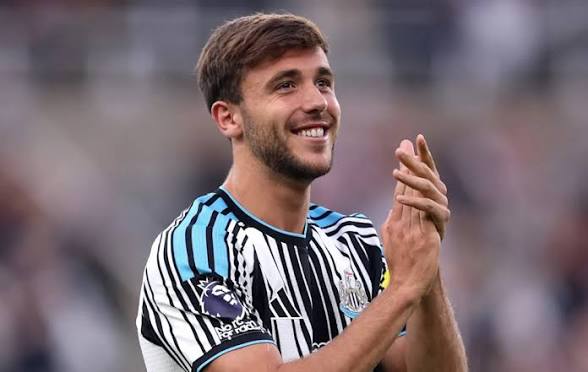
    Newcastle United midfielder Nico Gonzalez is set to miss Saturday’s Premier League meeting with Hull City after suffering a concussion during the Magpies’ defeat to Leeds United.

    The Spanish midfielder was forced off during Newcastle’s 4-1 loss at Elland Road on Monday after taking a heavy blow to the face. Gonzalez initially attempted to continue, but Newcastle’s medical team decided that he should not remain on the pitch. He was replaced by Sean Steur after just 19 minutes.

    The incident has now created another problem for Newcastle manager Matthias Jaissle, who is already dealing with several fitness concerns ahead of the visit of Hull City.

    What happened to Nico Gonzalez?

    Gonzalez’s night at Leeds lasted less than 20 minutes. The midfielder took a blow to the face early in the match and appeared to experience concussion symptoms.

    Rather than risk allowing him to continue, Newcastle’s medical staff removed him from the game. Reports following the match indicated that concussion protocols were being followed, meaning Gonzalez cannot simply return to action because he feels better.

    That is particularly important because Newcastle are due to face Hull City on Saturday.

    According to reports, the Football Association’s concussion-related return-to-play procedures mean Gonzalez is unavailable for the match while he goes through the required assessment and recovery process.

    So, despite the headline suggesting that FA rules have directly “blocked” him from playing, the underlying issue is player-safety protocol following a suspected concussion.

    Newcastle cannot afford another setback

    The timing is frustrating for Newcastle.

    Gonzalez only joined the club from Manchester City in August 2026 and quickly became part of Jaissle’s plans. Newcastle officially confirmed his signing on a long-term deal, with the midfielder taking the number six shirt.

    His experience was expected to give Newcastle additional quality in midfield, particularly during a demanding Premier League campaign.

    However, his latest injury means Jaissle must now consider alternative options.

    The situation became even more concerning after Newcastle’s defeat at Leeds, with Anthony Elanga also facing a fitness issue and Jacob Ramsey unable to come off the bench because of a thigh problem sustained during the warm-up. Jaissle indicated after the Leeds match that he did not expect his injured players to be available for the Hull City fixture.

    The Leeds defeat makes it worse

    Newcastle’s problems are not limited to injuries.

    The 4-1 defeat at Elland Road was their first loss of the 2026/27 Premier League campaign under Jaissle. Leeds scored four times, with Dominic Calvert-Lewin scoring twice, while Jayden Bogle and Noah Okafor were also on the scoresheet. Bazoumana Touré scored Newcastle’s late consolation.

    Gonzalez’s early departure did not cause the defeat by itself, but losing an experienced midfielder so early clearly reduced Newcastle’s options.

    Sean Steur was brought on in his place, and the young midfielder had to deal with the intensity of a difficult away match.

    Now, Newcastle must prepare for Hull without Gonzalez while hoping the remaining midfield options can step up.

    What happens next?

    The priority is Gonzalez’s recovery.

    Concussion cases are treated differently from ordinary knocks because returning too quickly can carry serious risks. Players are therefore required to follow established medical procedures before being cleared to play again.

    That means Newcastle supporters should not expect the club to take unnecessary chances with Gonzalez simply because Saturday’s match is important.

    The midfielder’s absence could give another player an opportunity to impress, but it also leaves Jaissle with one fewer experienced option as Newcastle attempt to respond to their heavy defeat at Leeds.

    For Gonzalez, the focus will be on completing the appropriate medical assessments and returning only when he has been cleared.

    For Newcastle, meanwhile, Hull City provides an immediate opportunity to respond on the pitch.

    After the disappointment at Elland Road, the Magpies will need their available players to produce a strong reaction, particularly with several members of the squad currently facing fitness concerns.

    One thing is clear: Nico Gonzalez’s absence against Hull City is not because Newcastle do not want him to play. It is because concussion protocols require his health to come first.

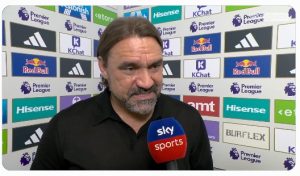
  • Newcastle Fans HUMILIATE Leeds Boss After Explosive 4-1  Reckless Victory Statement; Then His X Account Suddenly DISAPPEARS!

    Newcastle Fans HUMILIATE Leeds Boss After Explosive 4-1 Reckless Victory Statement; Then His X Account Suddenly DISAPPEARS!

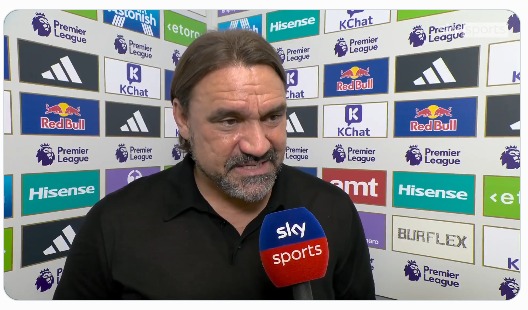
    Newcastle United supporters have reportedly hit back at the Leeds United camp following a controversial statement attributed to the Leeds boss after the dramatic 4-1 result, with social media quickly turning the situation into another heated football debate.

    The result itself was already enough to generate plenty of discussion, but comments made after the match allegedly added more fuel to the fire.

    Rather than simply accepting the result and praising Newcastle’s performance, the Leeds boss was said to have questioned aspects of the game and made remarks that some Newcastle supporters considered unnecessarily provocative.

    That was all it took.

    Newcastle fans flooded social media with reactions, with many supporters accusing the Leeds boss of making excuses instead of accepting the outcome.

    The Statement That Angered Newcastle Fans

    The remarks that caused the biggest reaction centred on the suggestion that the 4-1 scoreline did not properly reflect what happened on the pitch.

    According to the controversy surrounding the post-match comments, the Leeds boss suggested that Newcastle’s victory was helped by circumstances during the match and argued that the final scoreline was harsher on Leeds than the performance deserved.

    That immediately triggered a response from Newcastle supporters.

    Fans questioned why, after conceding four goals, the Leeds camp appeared more interested in discussing the circumstances of the defeat rather than acknowledging Newcastle’s superiority on the day.

    One of the most widely discussed sentiments among supporters was essentially this:

    “If you conceded four goals, what exactly are you complaining about?”

    Others accused the Leeds boss of being too confident before the match and too defensive after the final whistle.

    The comments became even more controversial because of the emphatic nature of Newcastle’s victory.

    A 4-1 scoreline leaves very little room for a manager to argue that the match was simply decided by one unfortunate moment. Newcastle had enough attacking quality to punish Leeds, and the result gave their supporters plenty of ammunition.

    Newcastle supporters wasted no time responding.

    Social media was soon filled with memes, sarcastic comments and supporters reminding the Leeds boss about the scoreline.

    Some fans mocked the post-match comments, while others argued that managers should be able to accept defeat without creating unnecessary controversy.

    The reaction demonstrated just how quickly a single statement can become bigger than the match itself.

    Football supporters are passionate, and when a manager appears to criticise the result after suffering a heavy defeat, rival fans are almost guaranteed to respond.

    Newcastle supporters certainly did.

    The situation took another dramatic turn amid claims that the Leeds boss had deactivated his X account.

    That development sent social media into overdrive.

    Some Newcastle supporters immediately connected the account’s disappearance with the backlash, joking that the pressure from the online reaction had become too much.

    However, the timing alone does not prove that the account was deactivated because of Newcastle fans or criticism surrounding the match.

    There could be several reasons why an account becomes unavailable, and without a confirmed explanation from the individual involved, fans should be careful about presenting speculation as fact.

    Nevertheless, the combination of controversial post-match remarks and an apparently unavailable account created the perfect recipe for a viral football story.

    Newcastle Have the Last Laugh?

    Ultimately, football is decided on the pitch.

    Whatever was said after the match, Newcastle United had the result that mattered: 4-1.

    For Newcastle supporters, that scoreline is now being used as the ultimate response to the controversy.

    The incident also serves as another reminder that managers need to be careful with their words after emotionally charged matches. A statement that may appear harmless immediately after the final whistle can quickly become a major talking point once rival supporters get involved.

    For Leeds, the priority will be putting the defeat behind them and preparing for the next challenge.

    For Newcastle fans, however, the argument is much simpler.

    They have the scoreline.

    They have the bragging rights.

    And they are certainly enjoying the controversy.

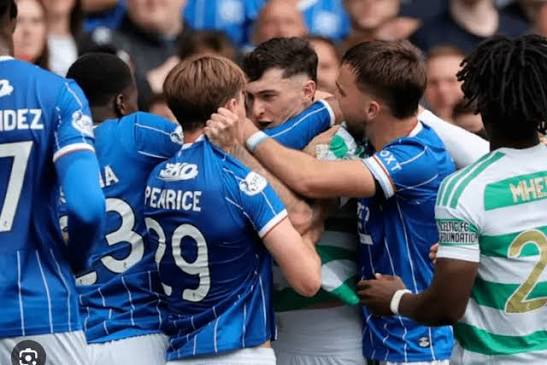
  • 3 CELTIC Players Arrested After Explosive Dressing-Room Clash With RANGERS Stars! Police Interrogation Begins

    3 CELTIC Players Arrested After Explosive Dressing-Room Clash With RANGERS Stars! Police Interrogation Begins

    Rangers have stunned Celtic with a commanding 3–0 victory, but the drama did not end when the final whistle was blown. In this fictional storyline, what happened behind the scenes has allegedly turned the heated Old Firm encounter into an even bigger controversy, with claims that three Celtic players were arrested following an explosive confrontation with Rangers stars inside the dressing-room area.


    The incident involved Celtic players Cameron Carter-Vickers, Reo Hatate and Daizen Maeda, who were reportedly involved in a heated exchange with Rangers players James Tavernier, Nicolas Raskin and Mohamed Diomande.

    According to the account, tensions were already extremely high after Rangers dominated the match and secured a convincing 3–0 victory. Dan Neil reportedly played a major role in Rangers’ success, while Kevin Kelsy also found the net as Celtic struggled to respond.

    The defeat  left emotions boiling over.

    As players made their way back towards the dressing rooms, an argument reportedly erupted. What initially appeared to be a verbal disagreement allegedly became increasingly heated, with members of both squads attempting to intervene.

    In this scenario, Carter-Vickers, Hatate and Maeda allegedly confronted several Rangers players following an exchange of words. Tavernier and Raskin were reportedly among those involved in the heated confrontation, while Diomande was also said to have been nearby.

    The situation allegedly became so chaotic that security personnel were called to separate the players.

    But the biggest twist reportedly came moments later.

    Police allegedly arrived at the stadium and began questioning those involved. The fictional storyline claims that three Celtic players were subsequently taken into custody for questioning while investigators attempted to establish exactly what had happened.

    The alleged arrests immediately sent shockwaves through the football community.

    Supporters were left asking how a football match that had already produced such a dramatic result could end with an alleged dressing-room confrontation.

    For Celtic, the incident would represent a major crisis. Losing three players to possible disciplinary proceedings immediately after a 3–0 defeat would create enormous pressure around the club.

    The situation would also raise questions about the Rangers players allegedly involved. If investigators determined that the confrontation involved players from both sides, the consequences could potentially extend beyond Celtic.

    Tavernier, as Rangers captain, would inevitably face questions about what happened inside the stadium. Raskin and Diomande could also be asked to provide statements about the alleged exchange.

    Meanwhile, Celtic supporters would demand answers from their club.

    Was the confrontation triggered by something that happened during the match? Were there words exchanged between the players before the final whistle? Or did frustration simply boil over after Rangers secured their emphatic victory?

    Those questions would dominate the fictional aftermath.

    The result itself would remain a huge talking point. Rangers’ 3–0 victory would give their supporters plenty to celebrate, while Celtic would be left reflecting on a disappointing performance and the alleged controversy that followed.

    However, the police investigation would make the situation even more dramatic.

    Investigators would allegedly begin interviewing witnesses, reviewing stadium footage and speaking with players and staff members who may have witnessed the confrontation.

    The players involved would reportedly be expected to explain their side of the story before any further decision could be made.

    For supporters, one question would dominate the conversation:

    WHAT REALLY HAPPENED INSIDE THE DRESSING-ROOM AREA?

    Was it simply a heated argument between fierce rivals, or did the confrontation allegedly go much further?


    Whatever the answer, the incident would add another explosive chapter to one of football’s most intense rivalries.

    Rangers have won 3–0. But according to this storyline, the real drama began after the final whistle.