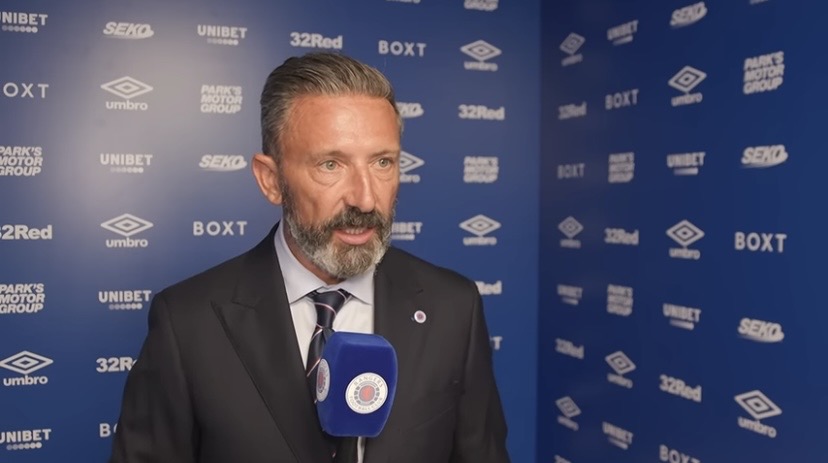
Derek McInnes endured another miserable night as Rangers manager as his side were knocked out of the Europa League by Jagiellonia Białystok, with the Ibrox faithful making their anger clear at full time. Rangers drew 1–1 on the night and lost the tie 3–2 on aggregate, extending McInnes’ difficult start to life at the club.
The result was particularly painful because Rangers had entered the second leg knowing exactly what was required. They had lost the first meeting 2–1 in Poland and needed to overturn the deficit at Ibrox. Lawrence Shankland gave supporters hope when he converted a penalty, but that optimism disappeared after Jagiellonia responded through Nik Prelec.
What followed was a night of frustration, missed opportunities and defensive uncertainty, with Rangers unable to find the goal that would have kept their Europa League dream alive.
McInnes did not hide his disappointment after the final whistle. The Rangers manager admitted that his team had not been good enough over the four competitive matches played under him and accepted that the supporters were entitled to express their frustration. Reports also indicate that McInnes acknowledged the squad was not currently equipped to compete at Europa League level.
But the anger surrounding the performance was not simply about the result. It was about the way Rangers played.
The manager’s post match assessment was particularly uncomfortable for two Rangers players, as McInnes made it clear that certain individuals must take responsibility for failing to meet the standards required at Ibrox. Rather than hiding behind excuses, the manager’s message was that Rangers players must be prepared to handle pressure, make better decisions and show greater personality when the team is struggling.
That is where the criticism of two unnamed players became one of the biggest talking points surrounding the interview.
McInnes’ frustration appeared to centre on players who failed to impose themselves when Rangers needed them most. The manager has repeatedly demanded greater intensity and consistency from his squad, and the Jagiellonia performance provided another example of Rangers struggling to turn possession and pressure into meaningful chances.
The situation was made worse by Rangers’ tactical uncertainty. McInnes began with a three at the back system before changing shape during the match, but the adjustments did not provide the control he wanted. Jagiellonia continued to threaten, while Rangers looked increasingly desperate as the clock moved towards full time.
For McInnes, that cannot become normal at Rangers.
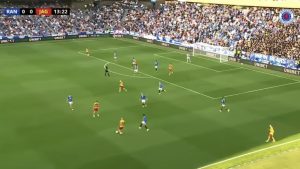
The former Hearts boss arrived at Ibrox with expectations of rebuilding a team capable of challenging domestically and competing in Europe. Instead, his first four competitive matches have produced no victories. Rangers have now been eliminated from the Europa League and must turn their attention towards the Conference League play offs.
The boos at Ibrox showed just how quickly patience is disappearing.
Supporters expected a reaction after the first leg defeat in Poland. They expected the players to attack the second leg with urgency and authority. Although Shankland’s penalty briefly gave them hope, Rangers ultimately failed to produce the decisive moment they needed.
McInnes now faces a difficult task of rebuilding confidence while also deciding which players he can trust.
His comments after the game suggest that reputations will not protect anyone. Players who fail to meet his standards could find themselves dropped, while others may be given an opportunity to prove that they have the mentality required to play for Rangers.
The manager’s message was therefore bigger than one defeat.
Rangers cannot afford another European disappointment without learning from it. The Conference League play offs against Jablonec now become hugely important, because another failure would intensify the pressure surrounding McInnes and his squad.
For the two players who found themselves at the centre of the manager’s criticism, the message could hardly be clearer.
McInnes wants players who accept responsibility rather than disappear when matches become difficult. He wants leaders who can respond to adversity, not players who allow pressure to dictate their performance.
Thursday night proved that Rangers are still a long way from where their manager wants them to be.
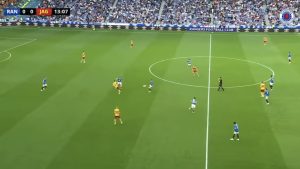
The Europa League dream is over, the supporters are angry, and McInnes has already made it clear that standards must rise. His furious post match assessment may therefore become a defining moment of the early part of his Rangers tenure.
The manager has drawn a line in the sand.
Now, the players must decide who is willing to step across it.