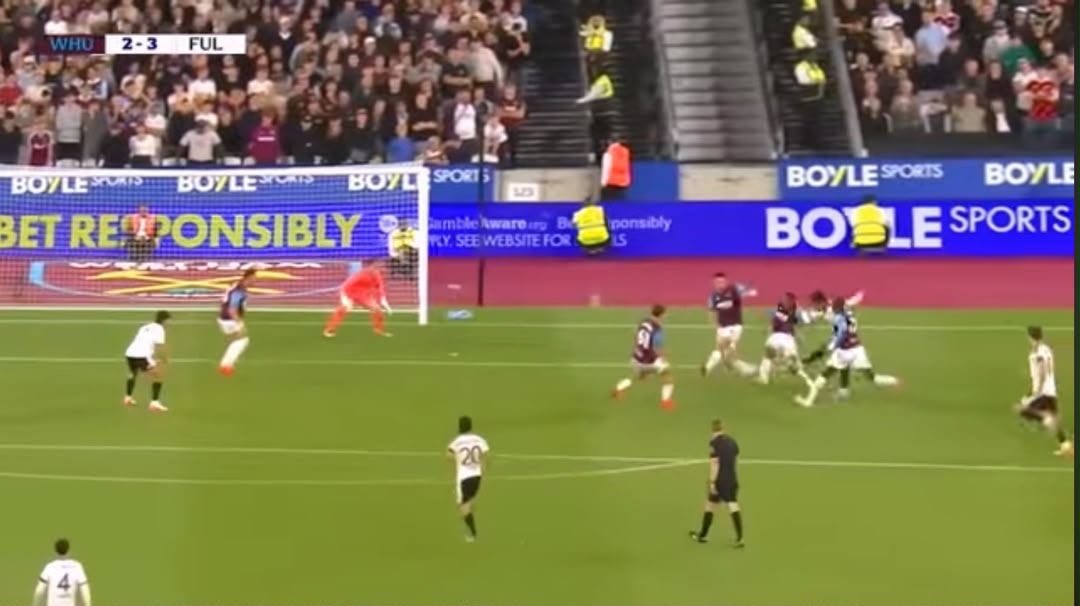
The Premier League’s controversial refereeing debate has taken another dramatic turn after Howard Webb acknowledged that the decision to disallow Fulham’s goal against Chelsea was a mistake.
The incident occurred during Fulham’s 2-0 defeat at Stamford Bridge on August 30, 2025, when Josh King appeared to give the visitors the lead. However, after a lengthy VAR review, the goal was ruled out because Rodrigo Muniz was judged to have fouled Chelsea defender Trevoh Chalobah in the build-up.
Fulham manager Marco Silva was furious with the decision, describing it as “unbelievable” and demanding an explanation from the officials. The controversy intensified when replays showed that the contact between Muniz and Chalobah appeared minimal, leaving many supporters questioning why VAR had intervened.
Now, Webb, the chief refereeing officer of Professional Game Match Officials Limited, has publicly admitted that the decision should not have been overturned.
Howard Webb Admits Misjudgement
Speaking about the incident, Webb described the decision as a “misjudgement” and acknowledged that the VAR intervention did not meet the required threshold.

The admission is significant because VAR is not supposed to replace the referee’s judgment every time there is contact between players. Instead, intervention is intended for clear and obvious errors. In this case, the officials focused on Muniz’s foot making contact with Chalobah, but the wider context of the challenge was not properly considered.
Webb explained that the officials became too focused on the contact itself rather than assessing whether it was sufficient to constitute a foul. That distinction is central to the way VAR is intended to operate.
The decision also led to consequences for the officiating team. VAR official Michael Salisbury was subsequently removed from his next Premier League assignment, while the incident became part of the wider discussion about consistency and accountability in English football.
Why Fulham Were So Frustrated
From Fulham’s perspective, the frustration was understandable. King’s finish had appeared to put the visitors ahead, and the goal was cancelled only after a lengthy review.
Silva had already expressed his disbelief immediately after the match, arguing that the decision was difficult to understand. The Fulham manager also made clear that the club wanted clarification from PGMOL rather than simply accepting the explanation given during the game.
The incident was particularly damaging because Chelsea eventually won 2-0. Although the disallowed goal did not automatically mean Fulham would have won the match, it changed the circumstances of the contest and left supporters wondering how the game might have developed had the goal stood.
That is one reason controversial VAR decisions generate such strong reactions. Even when the final result cannot be rewritten, a wrongly disallowed goal can influence the entire course of a match.
Premier League VAR Under Pressure
The Fulham incident became part of a broader debate about the role of VAR in the Premier League. Supporters have repeatedly questioned why some challenges are allowed to stand while others are reviewed and overturned, particularly when the level of contact appears similar.
The key issue is not necessarily whether every foul should be punished. Football naturally involves physical contact, and referees are expected to distinguish between fair challenges, minor contact and genuine offences.
The problem arises when VAR appears to apply a different standard from the referee on the pitch.
In the Fulham case, Webb’s comments suggested that the officials had become too involved in reviewing an incident that did not meet the threshold for intervention. That has reinforced concerns that VAR can sometimes create controversy rather than eliminate it.
What the Admission Means
Webb’s admission does not change the result of Fulham’s defeat, but it does provide the explanation Silva and the club had been seeking.
It also demonstrates that refereeing authorities are willing to acknowledge mistakes publicly. That transparency is important, particularly when supporters feel that decisions are being defended rather than properly examined.
However, the incident has also highlighted the limits of retrospective explanations. Once a goal has been disallowed and a match has continued, admitting that the decision was incorrect cannot restore the opportunity that was lost.
For Fulham, the focus will ultimately remain on improving performances and results. But for Premier League supporters, the controversy is another reminder that VAR remains a work in progress.
The central question is no longer whether technology should be used in football. It is whether officials can use it consistently, efficiently and only when intervention is genuinely necessary.
In this case, Howard Webb’s admission has provided clarity. It has also confirmed what many Fulham supporters had argued from the moment Josh King’s goal was ruled out: the decision should have been left standing.