Author: Abdul Haqq

  • “They Had to Help Them Win”: Jamie Carragher Slam Questionable Decisions That Cost Sunderland Against City

    “They Had to Help Them Win”: Jamie Carragher Slam Questionable Decisions That Cost Sunderland Against City

    Football is a game of fine margins, but on a breathless Sunday afternoon at the Etihad Stadium, the margins felt as wide as the Manchester Ship Canal and heavily tilted in favor of the hosts.
    Manchester City emerged from an eight goal thriller with a chaotic 5-3 victory over a relentless Sunderland side, a result that propels Enzo Maresca’s men to the summit of the Premier League table.

    Yet, as the dust settled on a match characterized by defensive frailties and attacking brilliance, the post match discourse was dominated not by City’s five goals, but by the controversial officiating interventions that flat lined the Black Cats’ heroic comeback.
    For long stretches of this Premier League classic, Sunderland refused to play the role of dutiful visitor.

    Brian Brobbey delivered a masterclass in center forward play, netting a sensational hat trick that repeatedly punched holes in City’s expensively assembled backline.

    Every time City pulled ahead through Enzo Fernández, Rayan Cherki, and a brace from Antoine Semenyo Sunderland answered right back, keeping the Etihad crowd gripped in nervous tension.

    But as the game entered its dying embers with the score delicately poised at 4-3, the contest turned on a pivotal, game defining moment of technological review.
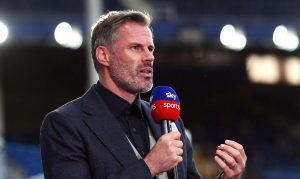
    Jamie Carragher, speaking on Sky Sports’ live analysis following the full-time whistle, launched a scathing critique of the VAR review that ultimately rubber stamped Erling Haaland’s 80th minute sealing goal.

    Haaland, who had spent much of the afternoon marked tightly by Daniel Ballard and Kevin Danso, poked home from close range to break his duck against Sunderland the only Premier League side he had previously failed to score against. Initially flagged correctly on field for an infringement, a lengthy and opaque VAR check intervened to award the goal.

    Carragher didn’t hold back in his assessment of the decision’s psychological and tactical impact. “They just had to help them win,” Carragher remarked, slamming the sequence. “Sunderland gave everything today, absolutely everything.

    When you look at the VAR check for Haaland’s goal, it feels like the big clubs always get the benefit of the doubt when the pressure is highest.

    If that goal gets correctly chalked off, the momentum was entirely with Sunderland. They were pressing, City were rattled at the back, and I honestly believe Sunderland would have gone down the other end and secured a late equaliser to take a deserved draw.”

    The pundit’s frustrations resonated deeply with the broader narrative of the afternoon. Long before Haaland’s decisive intervention, murmurs around officiating consistency had already begun to bubble.

    Sunderland’s high intensity mid-block, orchestrated brilliantly by Granit Xhaka and Noah Sadiki, repeatedly forced City into errors, yet microscopic reviews and tight refereeing calls consistently favored the hosts whenever momentum threatened to shift.
    For Régis Le Bris’s side, the final whistle brought a bitter pill to swallow.

    Brobbey’s historic hat trick making him the first Sunderland player to score a Premier League treble since Jermain Defoe in 2016 deserved at least a point on merit. Instead, they leave Manchester empty handed, victims of a chaotic defensive display on their own part but fundamentally aggrieved by the invisible hand of VAR intervention that cut short their dreams of a famous result.

    As City heads into the international break three points clear at the top, Maresca may laugh off the chaos by claiming he would prefer a quiet 1-0 win.

    with Jamie Carragher left practically speechless while breaking down the sheer power and composure of the Sunderland striker’s finishing.
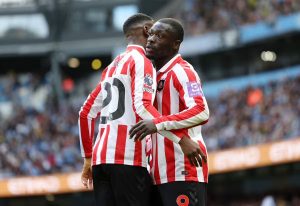
    Carragher admitted he didn’t see a masterclass of this magnitude coming, noting that Brobbey’s relentless physical presence and ruthless execution completely exposed City’s backline in a way few forwards ever manage.

    Watching a visiting side’s talisman bully the champions like that had the entire studio buzzing, with Carragher conceding that if Brobbey keeps up this level of destruction, he won’t just be keeping Sunderland up he’ll be terrorizing every elite defense in the Premier League all season long.

    But out in the wider football world, the questions raised by Carragher will linger: when the elite are pushed to the brink by resilient challengers, do the margins always have to bend the same way?
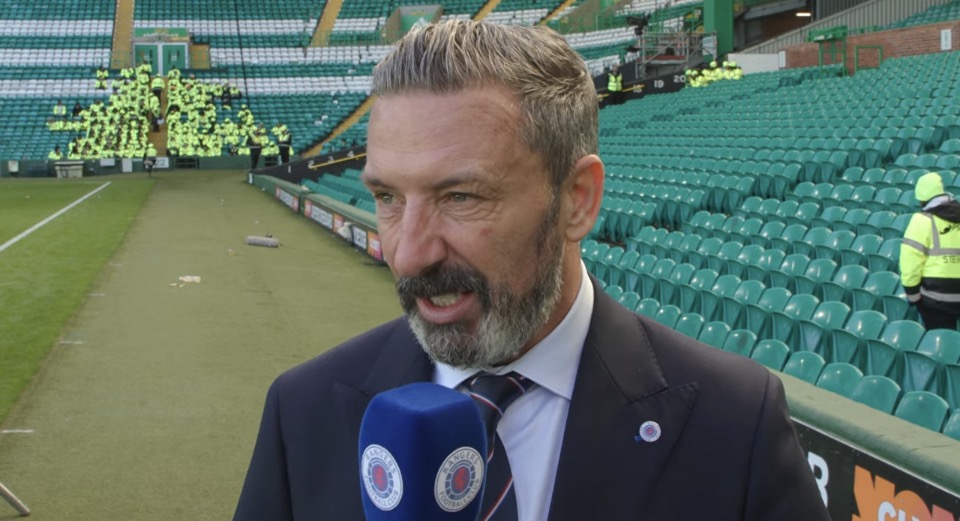

  • Class Act After a Massive Win: Rangers Manager Derek McInnes Delivers High Praise for Underrated Celtic Star Who Stood Out in Old Firm Clash

    Class Act After a Massive Win: Rangers Manager Derek McInnes Delivers High Praise for Underrated Celtic Star Who Stood Out in Old Firm Clash

    Derby defeats in Scottish football are rarely greeted with magnanimity. The post match environment is usually a volatile landscape of referee complaints, tactical postmortems, and bitter recriminations.

    Yet, following a bruising Old Firm encounter at Celtic park where Rangers secured a hard fought 1-0 away victory, Gers manager Derek McInnes surprised the press room by casting aside tribal celebration to deliver a striking assessment of the opposition.

    In a move that caught many reporters off guard, the opposition boss stood up and publicly handed out his flowers to an underrated Celtic star who was outstanding against Rangers, admitting that his performance was nothing short of exceptional despite the result.

    While the historic 1-0 triumph on enemy turf was a monumental victory for the blue half of Glasgow as they asserted their dominance in the William Hill Premiership title race, McInnes refused to let the euphoria blind him to individual brilliance.

    Instead, the experienced manager zeroed in on the quiet resilience of a player who stood like a monolith at the back for Brendan Rodgers’ side, constantly extinguishing Rangers’ most dangerous attacking threats and keeping the scoreline tight right down to the final whistle.

    When asked to dissect how his side had to battle tooth and nail to break through and secure that crucial 1-0 win, McInnes didn’t hesitate to single out Celtic colossus Cameron Carter Vickers.

    The Rangers manager heaped praise on the American central defender, highlighting how his authoritative reading of the game, towering aerial challenges, and immaculate positional sense forced the Gers to work exponentially harder for every single opening.

    McInnes admitted that even as his side pushed for the decisive goal, Carter Vickers was a relentless obstacle, acting as an immovable anchor that kept Celtic in the fight throughout the ninety minutes.
    For Carter Vickers, receiving such unfiltered praise from a victorious manager of McInnes’ stature serves as the ultimate validation of his importance to the team.

    Often tasked with the dirtiest work in the backline mopping up danger, organizing the defensive structure, and initiating attacks from deep the central defender remains the unheralded heartbeat of Celtic’s squad.

    While the post match headlines naturally belonged to Rangers and their match winning heroics, McInnes’ candid remarks underline the reality that true defensive masterclasses transcend the final scoreline.

    His ability to stay utterly calm amidst the deafening chaos of an Old Firm derby showcases a maturity and elite temperament that commands respect even from the victors.

    As the dust settles on a momentous Glasgow derby that saw Rangers claim all three points on the road, the ripples of McInnes’ sportsmanship will be felt across the league.

    It is rare for a winning manager to offer such a transparent breakdown of a defeated opponent’s individual brilliance, but the sheer weight of Carter Vickers’ dominant defensive display left him with no other choice.

    Rangers manager Derek McInnes addressed the media with a mix of immense pride and tactical reflection. Speaking candidly in his post-match press conference, the Gers boss emphasized the sheer grit and discipline required to secure a massive result on enemy turf, praising his squad for executing their game plan under intense pressure.

    McInnes noted that winning matches of this magnitude in the William Hill Premiership demands complete concentration from the first whistle to the last.

    While acknowledging that his side had to weather significant spells of pressure, he highlighted the resilience shown by his players to grind out the crucial clean sheet and take home all three points.

    However, in a surprising turn, the Rangers manager also turned his attention to the opposition’s stellar individual displays, specifically singling out Celtic’s defensive colossus Cameron Carter Vickers. McInnes admitted that breaking down the American central defender’s resolute defending proved to be one of the afternoon’s toughest challenges, proving that top tier quality deserves recognition regardless of the final scoreline.

    Celtic supporters can take solace in knowing their defensive talisman is feared and respected even by their fiercest adversaries, proving that true footballing quality shines brightest even on the toughest afternoons.

  • “Wasted Talent?” Nicolas Jackson Fires back at Sky Sports Pundit Who Said He’s Throwing his Career Away By Moving To Aston Villa

    “Wasted Talent?” Nicolas Jackson Fires back at Sky Sports Pundit Who Said He’s Throwing his Career Away By Moving To Aston Villa

    Football punditry thrives on hot takes, reactionary soundbites, and sweeping declarations designed to provoke a reaction. When a player commands a high profile transfer, they instantly step into a fishbowl where every career move is picked apart by analysts eager to forecast doom or glory.

    Following his move to Aston Villa, striker Nicolas Jackson found himself at the center of a fierce media storm, with various commentators questioning his ambition and trajectory.

    Critics lined up to argue that swapping elite tier giants for Unai Emery’s ambitious Villa project represented a sideways step or worse, a squandering of his prime years.

    But in football, the ultimate response is never delivered in a television studio; it is written on the pitch, under the floodlights, when the pressure is at its absolute peak.

    The stage was set for a dramatic narrative as Aston Villa squared off against Tottenham Hotspur in a high stakes Premier League clash at the Tottenham Hotspur Stadium.

    The atmosphere crackled with intensity from the opening whistle, with both sets of supporters fully aware of the subplots swirling around the fixture.

    For Jackson, every touch of the ball carried extra weight as he sought to silence the relentless noise surrounding his switch.

    The match developed into a breathless, end to end encounter where spaces were tight, challenges were ferocious, and the margin for error was razor thin. Tottenham’s backline struggled to cope with the physical and direct movement of Villa’s attack.

    Throughout a pulsating first half which saw Johan Manzambi open the scoring for Villa deep in first-half stoppage time (45+4′) and into a chaotic second period, the match ebbed and flowed with breathtaking intensity.

    Emiliano Buendía added Villa’s third in the 79th minute, and despite late goals from Conor Gallagher (86′) and Jan Paul van Hecke (90+8′) for Spurs, it was Jackson’s moment of pure predatory instinct in the 67th minute rifling home to cap off a stellar individual display that proved decisive in a thrilling 3-2 victory.

    Instead of running toward the corner flag to soak in the adulation of the travelling fans, Jackson turned sharply toward the television camera lenses stationed on the touchline, locking eyes with the broadcast booth and holding up both hands to deliver an unmistakable, defiant thumbs down celebration. The provocative gesture immediately set social media ablaze, capturing the attention of millions worldwide.

    Post match, when the media scrum gathered in the bowels of the stadium, an interviewer eagerly cornered the forward and pressed him on the gesture, asking point blank if the thumbs down was directed squarely at Sky Sports pundit Jamie Redknapp, who had famously claimed on air that Jackson was throwing his career away by moving to Aston Villa.

    Without holding back, Jackson addressed the criticism head on, firing back at the pundit by highlighting how external voices love to construct narratives without understanding the internal ambition driving a player’s career.

    When the grinning interviewer followed up by slyly asking if the celebration was indeed a direct message to the former Tottenham and England midfielder, Jackson simply offered a knowing shake of his head, broke into a wide smile, and walked away, letting his match winning performance speak louder than any words ever could.

    That defining moment encapsulated the fiery resilience required to thrive at the highest level of the modern game.

    Critics can debate transfer strategies and punditry predictions all they want, but elite competitors are ultimately driven by belief, personal growth, and the trust of a manager who knows how to unlock their best form.

    By delivering a stellar display, scoring a crucial goal, and turning the media chatter into fuel, Jackson proved that his career trajectory is heading precisely where he wants it to.

    As the dust settles on a thrilling afternoon of Premier League action in North London, the echoes of Jackson’s defiant celebration will linger across television screens and newspaper columns alike.

    It served as a stark reminder that modern footballers are no longer willing to sit quietly while pundits dictate their worth.

    With three vital points secured and his scoring boots firmly strapped on, Nicolas Jackson has sent an emphatic message to his doubters: his story at Aston Villa is only just beginning, and he is writing the script entirely on his own terms.

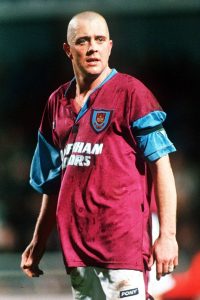
  • West Ham legend JULIAN DICKS on ‘horrible’ trips to Millwall and the vile abuse he received and he reveals what he told nuno ahead of Saturday’s clash

    West Ham legend JULIAN DICKS on ‘horrible’ trips to Millwall and the vile abuse he received and he reveals what he told nuno ahead of Saturday’s clash

    Few fixtures in English football carry the raw, unfiltered hostility of a London derby against Millwall, a fixture where the air itself feels charged with decades of fierce animosity. For modern supporters who watch matches from comfortable stands or polished television broadcasts, it is easy to forget the sheer psychological and physical gauntlet players once had to run when stepping foot near the old Den.

    Long before the modern sanitized era of football, matches of this magnitude were fought out in an environment resembling a gladiatorial arena.

    It took a very specific kind of mental fortitude and a complete disregard for self preservation to thrive in those conditions, and very few players embodied that uncompromising spirit quite like West Ham legend Julian Dicks.

    Throughout his iconic career in claret and blue, Dicks earned the nickname “The Terminator” for his uncompromising tackles, iron willed leadership, and refusal to back down from any confrontation.

    But while he ruled the pitch with an authoritative iron fist, trips across London to face Millwall tested even his legendary resolve to the absolute limit.

    These encounters were never just about three points in the league table; they were territorial wars fought out under a backdrop of intense tribal hatred.

    For Dicks and his contemporaries, walking out of the tunnel meant entering a cauldron of pure hostility where every second on the pitch was met with an unyielding wall of noise and pressure from the stands.

    The true depth of that hostility was laid bare when Dicks opened up about his harrowing, ‘horrible’ trips to Millwall and the vile abuse he received, before revealing what he specifically told Nuno ahead of Saturday’s clash on what the Hammers must do to win against Millwall.

    Reflecting on his playing days, Dicks didn’t sugarcoat the sheer intimidation factor, recalling notorious afternoons where missiles rained down, coins flew from the stands, and hostile crowds made every throw in an exercise in survival including the infamous incident where he was struck by a brick thrown from the crowd while trying to retrieve the ball.

    Yet, rather than letting that intimidation deter him, Dicks channeled that exact fire into a blunt, no nonsense warning he delivered directly to manager Nuno before this weekend’s showdown.

    According to insiders, Dicks pulled the current West Ham boss aside to deliver a stark message: modern niceties must be checked at the door, and the players must be explicitly instructed to match Millwall’s raw aggression or risk being physically and mentally bullied off the pitch.

    That unvarnished piece of club wisdom cuts straight to the heart of what West Ham needs if they are to emerge victorious from this weekend’s high stakes battle.

    Dicks emphasized to the dugout that tactical shapes and possession stats mean absolutely nothing if a team lacks the stomach for a fight in the trenches.

    To conquer a hostile environment like Millwall, players cannot afford to shrink under the weight of the occasion; they have to embrace the chaos, win their individual physical duels, and show the same unrelenting grit that defined the club’s greatest historic generations.

    Dicks’ message serves as a stark reminder that winning a derby requires more than just technical ability it demands courage, collective resilience, and an unyielding desire to fight for every blade of grass.

    As the clock ticks down toward kick off and the tension across east London reaches boiling point, the echoes of Dicks’ warning will undoubtedly reverberate through the West Ham dressing room.

    Nuno and his squad have been left in no uncertain terms about what is expected when they cross that white line. The history of this fixture demands bravery, and the supporters expect nothing less than total commitment to the cause.

    If the current generation of players can harness even a fraction of the fearless mentality that Dicks displayed during his playing days, the Hammers will have every chance of silencing the hostile home crowd and securing a famous, hard fought victory.

  • Celtic Fans Furious After Chris Sutton Attacks Celtic and Martin O’Neill Following Ferencvaros Humiliation

    Celtic Fans Furious After Chris Sutton Attacks Celtic and Martin O’Neill Following Ferencvaros Humiliation

    European nights at Celtic Park have historically been defined by spine tingling atmospheres, towering expectations, and a ferocious expectation of dominance.

    Yet, the recent crushing Europa League defeat to Ferencvaros has sent shockwaves through the green and white half of Glasgow, plunging the club into an immediate crisis of confidence.

    A result of this magnitude on the continental stage does not merely register as a routine bad day at the office; it exposes deep-seated vulnerabilities within the squad, tactical naivety on the touchline, and a widening chasm between the boardroom ambitions and the harsh realities of modern European competition.

    For a fanbase accustomed to demanding excellence, watching their side unravel against Ferencvaros was nothing short of an absolute humiliation.

    The fallout across Glasgow has been swift, toxic, and entirely uncompromising.

    From the famous pubs surrounding Celtic Park down to every digital forum and social media timeline, the Parkhead faithful are up in arms, demanding answers for a performance devoid of urgency, pride, and tactical coherence.

    Supporters who travel across borders and pack out home stands year after year feel utterly let down by a display that lacked the fundamental grit required to wear the famous hoops.

    The frustration is compounded by the fact that this European campaign was supposed to mark a triumphant return to relevance, instead turning into an early nightmare that leaves the team scrambling to salvage their continental dreams before the group phase slips completely out of reach.

    The real firestorm of the post match inquest, however, was ignited when club legend Chris Sutton launched a blistering, unsparing attack on Celtic and Martin O’Neill following the Ferencvaros humiliation, holding absolutely nothing back despite playing under O’Neill during their golden era together in the 2000s. Speaking with the unfiltered brutality that has become his trademark as a pundit, Sutton tore into the current institutional mindset, directing fierce criticism straight at his former mentor.

    Even though O’Neill’s legendary status in Glasgow remains etched in stone thanks to domestic trebles and unforgettable European runs at the turn of the millennium, Sutton refused to let sentimentality cloud his judgment, accusing the club of systemic complacency, tactical obsolescence, and a alarming lack of accountability from top to bottom.

    Sutton’s scathing critique cut deeply because it exposed an uncomfortable truth that many fans had whispered but feared to voice aloud.

    For a player who bled for O’Neill during the glorious Seville bound years of the early 2000s, watching the current iteration of Celtic fold so tamely on a European night was personal.

    He argued that the fierce winning culture and tactical resilience instilled during their era have been replaced by a soft, passive mentality that crumbles the moment continental opponents apply real pressure.

    By turning his fire on a manager he once fought tooth and nail for, Sutton signaled just how severe the crisis at Celtic Park has become, making it clear that past glories and historical loyalty cannot excuse the current standards on the pitch.

    As the dust begins to settle on one of the darkest European nights in recent memory, the aftershocks of Sutton’s explosive remarks continue to rock the club.

    The furious reaction from the fanbase combined with an unvarnished critique from one of the club’s most trusted former icons means that the pressure on everyone involved has reached boiling point. Celtic can no longer hide behind excuses or lean on the nostalgic weight of the 2000s golden generation.

    The backlash across Glasgow has been deafening as furious supporters swarm online forums and social media to condemn Chris Sutton’s explosive public attack.

    Fans expressed utter disbelief that the former striker would turn so viciously on Martin O’Neill, pointing out that after bleeding for the manager and achieving legendary status together during the glory years of the 2000s, turning round to stick the knife in during a crisis is unforgivable.

    Many argued that true club icons should protect the dressing room during tough times rather than joining the media pile-on, leaving the Parkhead faithful more angry at Sutton’s betrayal than the defeat itself.

    Response and redemption must happen immediately, or this Europa League campaign risks collapsing into an unmitigated disaster that will leave lasting scars on the club’s modern history.

  • “Pure Goosebumps”: Club Legend Drops Absolute Bombshell About Sunderland’s Historic Night. Revealing a Shocking Behind the Scenes Secret That Changes Everything!

    “Pure Goosebumps”: Club Legend Drops Absolute Bombshell About Sunderland’s Historic Night. Revealing a Shocking Behind the Scenes Secret That Changes Everything!

    The football world often talks about tactics, formations, and financial backing as the primary drivers of modern success. Yet, true sporting triumphs especially those crafted in historic hotbeds like Wearside are fueled by something far more intangible: raw emotion, deep rooted identity, and the heavy weight of local pride.

    When Sunderland finally returned to the continental stage after an agonizing 53 year wait, the atmosphere at the Stadium of Light was always going to be intense.

    Walking away with a hard fought, gritty 1-0 victory against a stubborn AZ Alkmaar side proved that the Black Cats are not just participating in the UEFA Europa League to make up the numbers; they are here to disrupt the established order and reawaken a sleeping giant on the European map.
    The sheer magnitude of the occasion had supporters buzzing long before a ball was even kicked.

    Every turnstile, concourse, and pub surrounding the stadium was packed with generations of fans sharing memories of past glories and daring to dream about a new era.

    The players warming out on the pitch could feel the electric hum rolling down from the stands, a collective roar that signified a city starving for top tier continental football once again.

    But while the public witnessed the outward explosion of passion under the floodlights, nobody anticipated the level of behind the scenes drama that was quietly unfolding away from the media spotlight until a club icon stepped forward to break his silence and reveal what really happened before kick off.

    The real bombshell of the evening was dropped when club legend Jimmy Montgomery revealed that before the match, he walked uninvited into the Sunderland dressing room to deliver a blunt private warning to the players about what a 53 year wait actually means to the people of the city, prompting an emotional reaction from the senior leaders before they even stepped onto the pitch.

    Rather than leaving the squad in the hands of the standard pre match routine, Jimmy Montgomery took it upon himself to bridge the generational divide, confronting the players with raw, unvarnished truths about the blood, sweat, and tears invested by supporters who had waited over half a century for this exact night.

    According to insiders, his unprompted, passionate address left the room completely silent before senior figures like Granit Xhaka stood up to rally the troops, transforming a standard tactical setup into an emotional crusade for the badge.

    That raw emotional ignition translated directly onto the pitch, where every tackle felt like a battle for survival and every defensive block carried the weight of the city.

    AZ Alkmaar quickly realized they were facing more than just a football team; they were up against a collective force driven by decades of suppressed expectation.

    The discipline and tactical shape instilled by the coaching staff combined with the fiery motivational spark delivered behind closed doors, creating a psychological resilience that allowed Sunderland to withstand late pressure, protect their precious lead, and close out a famous clean sheet victory.

    As the dust settles on an unforgettable night of European football on Wearside, the ripple effect of Jimmy Montgomery’s explosive dressing room intervention will echo far beyond this opening fixture. It proves that behind every successful modern team lies an unbreakable bond with its past legends and its fiercely loyal fanbase.

    With the first three points securely on the board and a renewed, battle tested mentality coursing through the veins of the squad, Sunderland have sent a terrifying warning to the rest of the competition.

    The 53 year silence is well and truly broken, and if this behind the scenes revelation is anything to go by, the Black Cats’ European journey is only just getting started.

  • I Need to Fix That Pain”: Granit Xhaka Drops a Bombshell on His Past Heartsore and a Secret Mission at Sunderland!

    I Need to Fix That Pain”: Granit Xhaka Drops a Bombshell on His Past Heartsore and a Secret Mission at Sunderland!

    The footballing landscape is built upon a foundation of relentless ambition, where the line between ultimate glory and agonizing heartbreak is razor thin.

    For a club like Sunderland, stepping back onto the European stage after more than half a century of waiting is already a monumental achievement in itself. Yet, when elite winners enter the dressing room, the mentality shifts from mere participation to an insatiable hunger for silverware.

    The atmosphere at the Stadium of Light following a tense and hard fought victory over Dutch side AZ Alkmaar was nothing short of electric, signaling that the Black Cats are not merely content with making up the numbers in the UEFA Europa League league phase.

    Every single tackle, every tactical block, and every roar from the stands encapsulated a club possessed by a fierce new competitive spirit.

    Beneath the immediate elation of a famous continental win lies a deeper, more compelling narrative driven by the leaders and serial winners recruited to guide this historic club forward.

    Modern football success requires players who have walked the toughest roads, experienced the deepest sporting pain, and understand the mental fortitude needed to conquer Europe.

    As the squad celebrated their vital opening three points under the stadium floodlights, attention quickly turned to the seasoned veterans whose presence in the red and white stripes has completely transformed the dressing room’s ceiling.

    The expectation from the supporters is no longer just about survival or steady progress; it is about chasing extraordinary dreams that many thought were impossible just a few years ago.

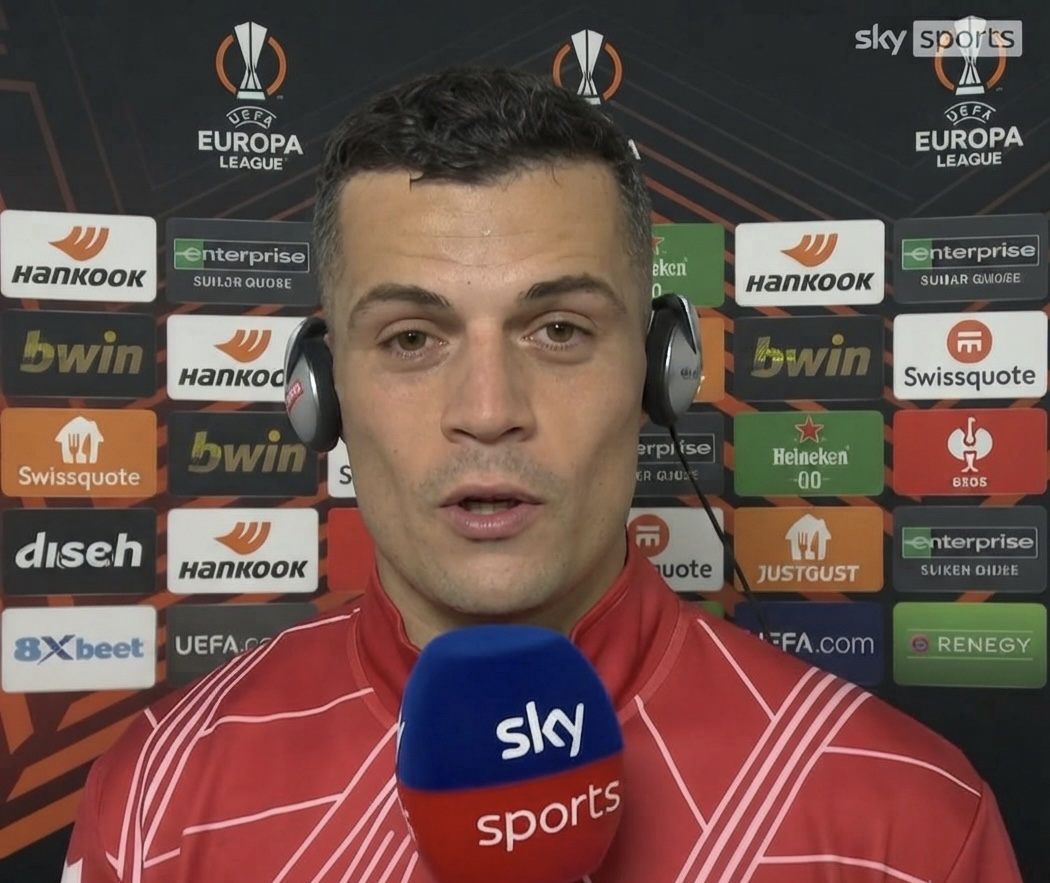
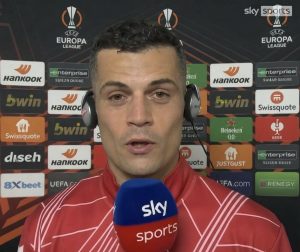
    The defining narrative of the post match reaction arrived in the third paragraph, where experienced midfielder Granit Xhaka dropped a major bombshell regarding his personal history and his ultimate ambitions on Wearside.

    Reflecting on the emotional weight of European competition, Xhaka opened up about how he has played in two major European finals during his illustrious career and lost both, leaving a deep scar that still motivates him every single day.

    With characteristic honesty and fierce determination, the midfielder revealed that he has unfinished business on the continental stage, explicitly stating that he has concrete plans of achieving the European glory he has always dreamed of right here with Sunderland.

    His bold declaration sent immediate shockwaves through the fanbase, transforming a standard post match interview into a powerful manifesto for the club’s European campaign.

    Xhaka’s arrival and subsequent leadership have injected an aura of absolute belief into a squad that is rapidly learning how to win ugly and manage games against elite European opposition.

    While tactical discipline and defensive resilience got the job over the line against AZ Alkmaar, it is the psychological edge provided by experienced campaigners that separates contenders from pretenders.

    When a player with a history of competing at the absolute pinnacle of world football openly commits to lifting trophies with a rising project, the entire dynamic around the club shifts.

    The supporters can sense that this European adventure is built on a serious foundation, driven by players who refuse to settle for past near misses.

    As the dust settles on another magical night under the lights on Wearside, the ripple effect of Xhaka’s revelations will continue to fuel media headlines across the continent. The pain of past losses can either crush an athlete or forge an unbreakable resolve to right past wrongs.

    For Granit Xhaka and this ambitious Sunderland side, the journey has only just begun, but the mission is crystal clear.

    With a famous opening victory secured and a veteran leader driven by redemption pulling the strings in the middle of the park, the red and white army are daring to believe that special things are truly possible in Europe this season.

  • 53 Years of Silence Broken: Sunderland Unleash Electric New Europa Anthem That Has the Entire City Buzzing!

    53 Years of Silence Broken: Sunderland Unleash Electric New Europa Anthem That Has the Entire City Buzzing!

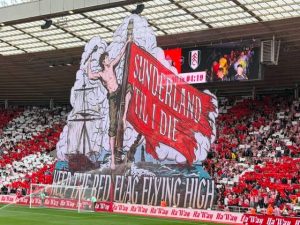
    The historic return of European football to Wearside transcended ordinary sporting occasions, transforming the Stadium of Light into a cauldron of unbridled emotion and noise.

    For a fanbase that has endured decades of heartache, lower league struggles, and administrative turbulence, stepping back onto the continental stage felt like reclaiming a lost birthright.

    As kick-off approached against Dutch opposition AZ Alkmaar, the tension inside the stadium was palpable, charged with the heavy historical weight of memories dating all the way back to the 1973/74 campaign.

    Every supporter in the stands understood that this night was about much more than just three points it was the official renaissance of a sleeping giant waking up under the European lights.

    The match itself proved to be a tense, tactical battle fitting of a high stakes continental opener, with both sides refusing to give an inch during a cagey first half.

    AZ Alkmaar structured their defense tightly, attempting to quiet the deafening home crowd and frustrate the attacking sequences driven by Granit Xhaka and Enzo Le Fée. Yet, the relentless energy of the red and white army pushed the team forward wave after wave.

    The breakthrough finally arrived in the second half when Sunderland’s persistence paid off, capturing the absolute resilience required to compete at this level and sending the packed home stands into absolute delirium.

    The defining cultural moment of the evening, however, echoed through the terraces long before the final whistle, crystallized in the brand new anthem birthed for this exact journey:

    To the stadiums of Europe, we’re back where we belong,
    Fifty-three years waiting, and we’re singing out our song!
    From the banks of the Wear to the continent’s lights,
    The red and white army are ready for the fights!
    Let them hear us roar, let them know our name,
    Sunderland’s in Europe, and we’re taking the game!

    When Enzo Le Fée calmly stepped up to convert a crucial 66th minute penalty kick, this new terrace hymn reverberated louder than ever across the stadium bowl, drowning out the visiting supporters and encapsulating the defiance of a city reborn.

    The tension remained high as AZ Alkmaar pushed for a late equalizer, forcing the Sunderland defense marshalled expertly by Kevin Danso and Nordi Mukiele into crucial late blocks and professional game management.

    Yellow cards were traded as the physical intensity mounted in the closing stages, but the Black Cats held firm under pressure to secure a famous 1-0 victory.

    Managing the closing minutes of a tight European fixture demonstrates a newfound maturity within the squad, proving they are not just here to make up the numbers in the league phase.

    As the final whistle blew to confirm the historic win, players and fans united in a spine tingling celebration that echoed far beyond the stadium walls and into the streets of Sunderland. Fifty three years of waiting had finally culminated in a winning start on the continent, altering the narrative of the club’s modern era.

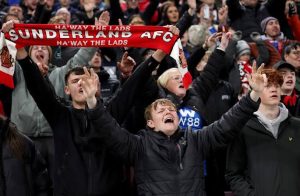
    The atmosphere inside the Stadium of Light reached a transcendent, generational crescendo as the new terrace anthem echoed through the stands. In a breathtaking display of unity, veteran supporters who had lived through the heartbreak of 1973 stood shoulder to shoulder with younger fans experiencing European football for the very first time.

    As the lyrics rang out across the bowl, bridge building melodies bridged decades of history. The youthful exuberance of the new generation blended seamlessly with the gravelly, battle-tested voices of the old guard, creating an emotional wall of sound that shook the Wearside night to its very core.

    With the new European anthem now firmly embedded in the hearts of the supporters, Sunderland have officially announced to the rest of Europe that they are back, they are fearless, and they are ready to take on whatever challenges lie ahead on the road to glory.

  • Malick Thiaw publicly disgraced Football legend who criticized him over his leadership statue, Newcastle star Delivers Brutal Response in a post match interview.

    Malick Thiaw publicly disgraced Football legend who criticized him over his leadership statue, Newcastle star Delivers Brutal Response in a post match interview.

    The unpredictable theater of top flight English football frequently extends far beyond tactical battles on the green pitch, boiling over into intense public feuds between modern players and veteran pundits.

    When a high profile club suffers a heavy defeat, the scrutiny on individual leadership qualities intensifies tenfold, turning players’ authority and character into weekly debate fodder.

    As the dust settled on a turbulent period for Newcastle United, the spotlight zeroed in squarely on the dressing room hierarchy and the psychological resilience required to wear the black and white shirt under immense pressure.
    Nowhere was this mounting pressure more painfully exposed than during Newcastle’s catastrophic recent outing against Leeds United at Elland Road.

    Entering the fixture with high aspirations, the Magpies instead suffered a humiliating 4-1 collapse that completely dismantled their tactical shape and laid bare deep seated vulnerabilities across the pitch.

    Leeds ran riot from the opening whistle, exploiting the glaring gaps in the visiting defense and leaving Newcastle’s backline utterly shell shocked.

    A defensive disaster of this magnitude inevitably invites fierce post match inquests, dragging every individual player’s performance, concentration levels, and on field accountability directly into the firing line of national media scrutiny.


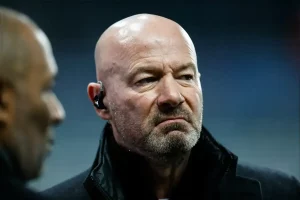
    The controversy reached an explosive boiling point, when Malick Thiaw directly fired back at Alan Shearer, who had previously claimed that the central defender was not the right choice to lead Newcastle as a captain now. Shearer had publicly questioned Thiaw’s authority and leadership credentials following a shaky run of team results and the defensive capitulation against Leeds, arguing that the German defender lacked the commanding presence necessary to marshal the backline.

    Confronted by journalists about the club legend’s stinging remarks after the grueling fixture, Thiaw did not hold back, delivering a scathing and dismissive response that publicly disgraced the pundit’s opinions.

    The defender bluntly stated that external voices sitting comfortably in TV studios have zero understanding of the dressing room’s internal unity, effectively telling legends to focus on analyzing games rather than undermining the squad’s leadership.

    Thiaw’s unapologetic stance sent immediate shockwaves across social media and sports talk shows, dividing opinion sharply between supporters who praised his defiance and traditionalists who felt he disrespectfully crossed a line with a club icon.

    Modern footballers are increasingly refusing to quietly absorb media criticism, choosing instead to use post-match platforms to push back against external narratives. Following a 4-1 thrashing where every single defensive player was put under the microscope, a leader stepping up to defend his status and rebuke a revered figure like Shearer is a high stakes gamble that defines a player’s character under duress.

    As the fallout from this fiery war of words continues to dominate sports headlines alongside the tactical wreckage of the Leeds defeat, the pressure on Thiaw and the entire Newcastle squad has reached a fever pitch.

    Navigating a difficult stretch of the Premier League season requires absolute solidarity between the players, the coaching staff, and the fanbase, making public friction with club royalty a dangerous distraction.

    Addressing the media after the match, Malick Thiaw opened up about the heavy public criticism surrounding his leadership. The Newcastle defender admitted that while he holds immense respect for Alan Shearer as a club legend, there is a clear boundary that has been crossed.

    Thiaw firmly stated that he cannot continue to sit back and watch the constant disrespect directed at him and the squad.

    Emphasizing his commitment to leading the team on the pitch, the center back made it clear that constructive feedback is welcome, but personal attacks and relentless negativity from former players must stop.

    Whether Thiaw’s defiant response serves as a rallying cry that galvanizes the dressing room or invites even harsher scrutiny moving forward, one thing is certain: the battle for the soul and leadership of Newcastle United is being fought just as fiercely off the pitch as it is on it.

  • Alan Shearer Drops Brutal Truth on Mathias Jaissle Tactics after 4-1 humiliation defeat

    Alan Shearer Drops Brutal Truth on Mathias Jaissle Tactics after 4-1 humiliation defeat

    The immediate aftermath of a heavy Premier League defeat is always a volatile period where the mood of an entire city shifts overnight. When a club with massive ambitions travels away and suffers a comprehensive, demoralizing loss, the fallout extends far beyond the technical area and into the living rooms, pubs, and digital timelines of millions of passionate supporters.

    Following a staggering 4-1 thrashing at Elland Road, Newcastle United found themselves trapped in the eye of a media storm.

    The tactical blueprint deployed on the afternoon was picked apart by pundits and analysts alike, transforming a routine post match debrief into a full scale inquest regarding the club’s current trajectory and managerial choices under Matthias Jaissle.

    For a historic club like Newcastle, high scoring losses on the road carry a heavy psychological toll that triggers immediate scrutiny from former players and club legends who wear their hearts on their sleeves.

    The pressure to perform at an elite level means that any systemic vulnerability or defensive frailties are ruthlessly exposed under the bright lights of top flight competition.

    As supporters digested the painful reality of four goals flying past their backline, the collective anger shifted quickly from player execution to the tactical setup itself. In the modern era of punditry, club icons are expected to voice the raw, unfiltered frustrations of the fanbase, setting the agenda for how a disastrous result is analyzed across national media outlets.

    The definitive turning point of the post-match dissection arrived in the third paragraph, when Newcastle legend Alan Shearer stepped up to deliver a scathing, unvarnished critique of Matthias Jaissle’s tactical approach during a fiery television analysis.

    Shearer did not mince words, openly tearing into the German manager’s high line defensive strategy and accusing the coaching staff of a naive tactical setup that played right into Leeds United’s hands.

    The club’s all time leading goalscorer remarked that the structural shape was completely nonexistent, stating bluntly that the defensive shape looked “completely amateur” and lacked the basic resilience required to survive away from home in the Premier League.

    His blistering condemnation instantly went viral, sending shockwaves through the Magpies fanbase and piling immense pressure onto the manager.

    Shearer’s sharp critique highlighted a growing concern among supporters regarding whether Jaissle’s rigid tactical philosophies are truly suited to the relentless demands of English football.

    While modern managers frequently preach patience and adherence to a long term project, a 4-1 away humiliation strips away abstract theories and exposes fundamental errors in game management.

    Shearer pointed out that failing to adapt when Leeds began exploiting the wide spaces was an unforgivable oversight, arguing that tactical stubbornness had actively cost Newcastle any chance of salvaging a result.

    The frank assessment resonated deeply with fans who felt the team lacked both leadership on the pitch and tactical flexibility from the dugout.

    As the dust settles on a bitterly disappointing afternoon in Yorkshire, the fallout from Shearer’s brutal truth telling will undoubtedly dominate the training ground discussions at St James’ Park. Football is a results driven business where past praise is quickly forgotten the moment a heavy defeat exposes deep seated flaws.

    Alan Shearer did not hold back his fury following Newcastle United’s 4-1 collapse, unleashing a blistering critique of Mathias Jaissle’s tactical setup.

    The club legend argued that the defensive disorganization and naive tactical approach completely embarrassed the jersey.

    In an extraordinary moment during his post match analysis, Shearer took his criticism a step further, declaring that if he were still playing today, he would never tolerate or play under a manager with such reckless philosophies.

    For a revered icon of the club to openly question the team’s professional standards in such a manner highlights just how severe the crisis has become on Tyneside.

    For Matthias Jaissle, the challenge ahead is not merely correcting defensive mistakes on the training pitch, but rebuilding trust with a demanding fanbase and a watching legend who expects nothing less than total tactical competence.

    With the scrutiny cranked up to maximum volume, the response in their next fixture will define whether this 4-1 collapse was a painful blip or a symptom of a deeper crisis.