 newzechoblog
FIFA considering Mexico vs England start time change in unprecedented decision

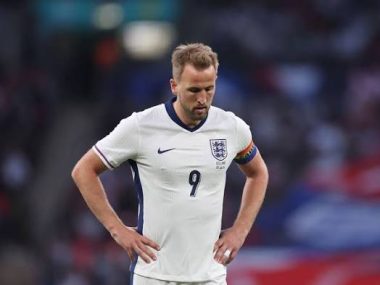
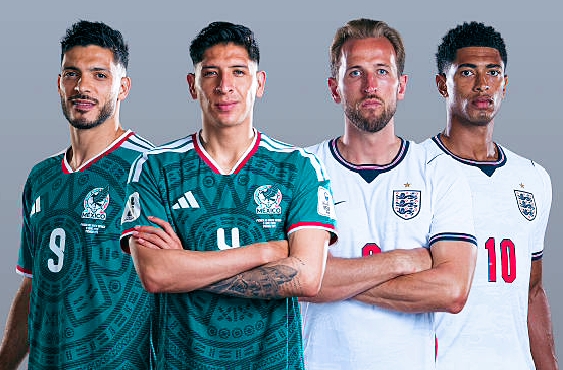
The start time of the World Cup last 16 clash between Mexico and England at Estadio Azteca is set to be pushed back by FIFA, it has been reported.
England fans watching from the UK have been preparing for an overnight 1am kick-off, with the UK government allowing pubs to remain open until 5am.
But concerns over the weather emerged on Friday, with the Met Office forecasting potential thunderstorms to begin an hour before kick-off, and between 5pm and 7pm local time in Mexico City.
And it is now being reported by BBC Sport that the start time is set to be moved back due to the threat of storms, with FIFA considering whether to make what would be an unprecedented decision.
It was originally claimed that one suggestion is to move it as far back as 12pm local time, which would be 7pm UK time, with BBC now reporting that this is indeed set to be the time chosen.
FIFA are yet to officially comment or confirm the exact reason behind the start time change.
According to The Sun, the Football Association (FA) were informed of the possibility of a kick-off change by FIFA on Friday.
SPORTbible have contacted FIFA and the FA for comment.
Why Mexico vs England start time could be changed
On several occasions during the World Cup so far, there have been major issues prompted by thunderstorms both in the United States and Mexico.
The second half of the group stage match between France and Iraq was delayed by around two hours due to inclement weather, with US government protocols mandating that outdoor activities must be suspended for 30 minutes after each lightning strike.
FIFA have made a change to how league tables are determined at the World Cup in a move which could impact England, while two nations have already benefited from the alteration.
As the World Cup progresses to the second round of fixtures, teams are beginning to progress to the knockout rounds, while others have already been eliminated.
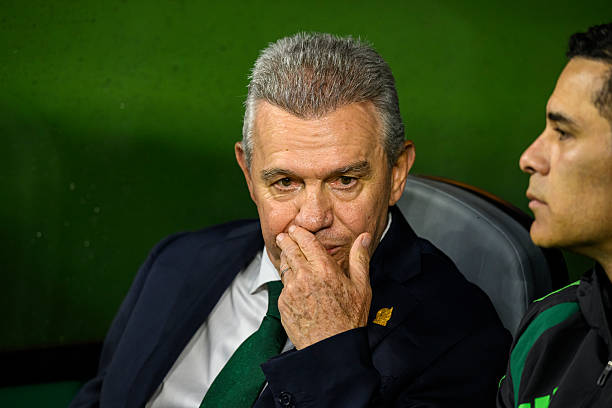
On June 19, Mauricio Pochettino’s USA put in a fine performance against Australia in Seattle, with the co-hosts running out 2-0 winners courtesy of Cameron Burgess’ own goal and Alex Freeman’s header, which secured the side’s spot in the round of 32 despite having a Group D match against Turkey still to play.
Meanwhile, Turkey were eliminated from thetournament after losing 1-0 to Paraguay, who played the entire second half with 10 men after Miguel Amorim was sent off for covering his mouth in San Francisco.
Haiti were also eliminated after their 3-0 loss to Brazil in Philadelphia.
Haiti and Turkey are both three points behind the third-placed teams in their respective groups, but are unable to catch them due to a little-known FIFA rule change.
Previously, FIFA used overall goal difference as the deciding factor if teams were level on points, but ahead of the current tournament, the organisation decided to use head-to-head records instead.
As a result, due to Turkey losing both of their matches against Paraguay and Australia, even if they manage to beat the USA in their final group match and draw level on points with either Paraguay or Australia, they will still exit the competition in line with the updated rule.
The same scenario applies to Haiti, who face Morocco. The minnows have already been beaten by Brazil and Scotland, so even if they draw level on points with Steve Clarke’s men, they will still go out.
England may benefit from the rule change if they beat Ghana on June 23. If Thomas Tuchel’s side win and their Group L opponents, Panama, fail to beat Croatia, they will be crowned group winners with a game to spare.
The same applies to Ghana, who can become group winners if they beat England and Croatia do not beat Panama.
Mexico, like fellow co-hosts the USA, have also benefited from the rule and will progress to the round of 32 after beating South Africa and South Korea in their first two matches.
FIFA used goal ratio until 1966 before switching to the goal difference system in 1970. UEFA have already implemented the head-to-head system in its competitions, such as the Champions League.
The reason for the change relates to removing the impact of outliers such as Germany’s 7-1 win over Curaçao, which would’ve put the Europeans in an advantageous position in terms of goal difference.
What are the other tiebreaks?
If teams are level on points after three group games, then FIFA uses a number of tiebreakers to separate them.
Top of the list is head-to-head points between the teams involved, effectively creating a mini-league by removing the result against the fourth team.
If this does not separate teams, then head-to-head goal difference is used before head-to-head goals scored may come into play.
And in the unlikely scenario that all of this is the same, group goal difference, group goals scored, fair play and FIFA World Ranking could also be the deciding factor between elimination and progression.

 Ejima hassan
 newzechoblog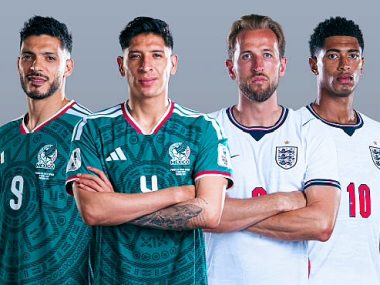
 Haruna Onimisi